Get Full Government Meeting Transcripts, Videos, & Alerts Forever!
Get email alerts on the Budget Fees topic
No spam. Unsubscribe anytime.
Mooresville CFO warns revenues flattening; board weighs fee increases for solid waste and stormwater
Summary
Town CFO Chris Quinn told the board that property and sales tax growth is flattening and presented fee and tax options — including raising the residential solid waste fee, indexing fees for inflation, and a proposed 2 percentage-point increase in occupancy tax — as ways to close an estimated gap in next year’s budget.
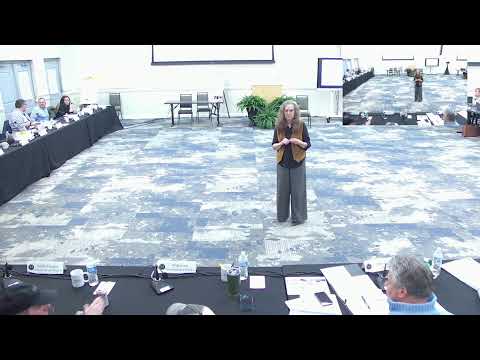
Chris Quinn, the town’s finance director, told the Mooresville town board that core revenues are close to projections but are flattening, and that ongoing expense growth could require difficult budget decisions. "Our revenues are coming in as expected," Quinn said during a budget presentation that reviewed data through Dec. 31 and a preliminary look at January figures.
Quinn said the general fund, utility fund and stormwater fund are performing largely as expected through midyear, but cautioned that revenue gains from recent approvals, such as the Mooresville Village development, can take years to show in property-tax receipts. He also showed that the town’s sales-tax growth has moderated to roughly 3% year-over-year, while occupancy taxes rose after a nearby storm displaced travelers earlier in the fiscal year.
Why it matters: Quinn framed the numbers as an early warning to the board that, unless revenues exceed projections, the town will face trade-offs when assembling the fiscal 2026 budget. He asked the board to consider changes that would reduce the amount of general fund revenue used to subsidize programs currently paid in part by fees.
Among the potential changes Quinn discussed: indexing fees for inflation, raising the monthly solid-waste fee from the current $12 per residential unit, and revising the stormwater fee. Quinn said the $12 monthly solid-waste fee covers only about 53% of the program’s cost; the remainder is funded by property taxes. He presented two illustrative options that would shift more of the program cost away from property taxes: a $17 monthly fee (which Quinn estimated would free about $800,000 of general-fund revenue for other priorities) and a $21 monthly fee (which he said would nearly eliminate the property-tax supplement).
Quinn also told the board that the stormwater fee is currently $3.40 per equivalent residential unit and covers operating costs but does not fund capital projects. He said the town has a stormwater rate study underway to examine how to fund maintenance and potential capital improvements.
CVB and occupancy tax: Quinn said the town’s Convention and Visitors Bureau has unanimously recommended raising the local hotel occupancy tax from 4% to 6%. He said a 2-point increase would add roughly $650,000 a year in revenue and that state rules require 75% of occupancy-tax proceeds be used to promote travel and tourism. The CVB has asked the board to endorse pursuing the increase and to coordinate on how the additional revenue would be spent.
Board reaction and next steps: Commissioners asked staff to return with additional detail on fee structures, examples from peer towns, and how indexing might be implemented. Several commissioners emphasized the need to protect the town’s core resurfacing and maintenance programs while also addressing rising personnel costs and public-safety needs.
Ending: Quinn asked the board to treat the presentation as an early-stage preview rather than final decisions, saying staff will bring refined fee studies and options into the FY 2026 budget process.