Get Full Government Meeting Transcripts, Videos, & Alerts Forever!
Get email alerts on the Public Safety Sheriff Report topic
No spam. Unsubscribe anytime.
Sheriff Kevin Armstrong presents year-end report citing steady calls, jail and mental-health programs
Summary
Sheriff Kevin Armstrong told Gilpin County commissioners the department is handling steady 911 and service volumes while expanding in-jail behavioral health and medication-assisted treatment programs and implementing body-worn video and scanner systems.
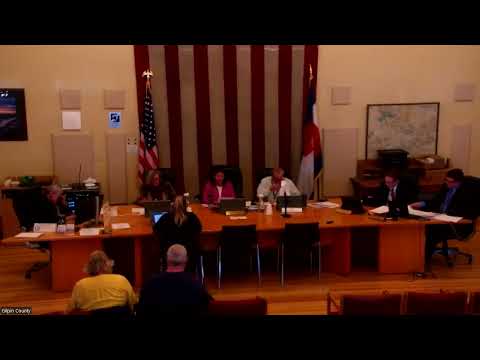
Sheriff Kevin Armstrong delivered the Gilpin County Sheriff’s Office year-end report to the county commissioners, describing workloads, staffing, and several programs brought online over the past year.
Armstrong told the board the department’s communications center handled thousands of contacts: “13,518 videos were uploaded from the body cameras of our deputies,” he said when describing digital evidence handling, and he reported roughly 4,095 911 calls and more than 21,000 inbound calls in the period covered by the report. He said the department’s video inventory now totals more than 32,000 items, including body-worn-camera footage and videos from residents and businesses.
The report covered detention operations, patrol, dispatch, victim services and emergency management. Armstrong said the jail recorded 738 bookings in the year and an average daily population of about 30.6; the sheriff added that the facility was designed for a 55-person operating level even though earlier modifications increased theoretical capacity to 90, and the office aims to keep the operational population near the 55-person level to remain within current standards.
Armstrong and staff described two treatment programs for people in custody: a jail-based behavioral health service (JBBS) and a medication-assisted treatment (MAT) program. Both programs are voluntary, Armstrong said, and he described recent state legislation that requires continuity of certain medications at release. He told the commissioners the MAT cost estimate is about $1,600 per person per month in some cases and that funding for these services comes from grants and reimbursements when available.
The sheriff’s presentation also detailed proactive patrol activity (about 8,274 proactive actions, or roughly 23 per day), court-security figures (10,934 people screened through the courthouse magnetometer and 109 weapons confiscated during the reporting period), and evidence/inventory work including disposition of legacy evidence and digital media management. Staff reported that the department has been working to reduce long-held evidence in accordance with statutes and to make discovery available to prosecutors on schedule.
Armstrong described new or upgraded equipment and programs: a body-scanner for jail intake, new CAD/RMS and records management software, ruggedized field laptops and cellular equipment for telehealth in patrol vehicles, and a Ford transport van pending delivery. He credited staff and partner agencies — including Blackhawk, Central City and state agencies — for cooperative responses to incidents such as large-scale reunification exercises and weather-related events.
Commissioners asked for additional breakdowns in future reports, including clearer geographic breakdowns of arrests (to separate unincorporated-county arrests from city/casino arrests) and more detailed year-over-year comparisons as the office continues to transition to a new records system. Armstrong said the department is still working with new software and that some historical reporting was done manually while systems were updated.
The board thanked Armstrong and Undersheriff Greg DeMoe for the presentation and invited further, more frequent reporting as staff automation improves.