Get Full Government Meeting Transcripts, Videos, & Alerts Forever!
Get email alerts on the Gender Equality topic
No spam. Unsubscribe anytime.
UN leaders, activists mark Beijing anniversary and press for urgent action on gender equality
Summary
United Nations officials, survivors and activists highlighted stalled progress on gender equality, rising threats from violence and digital exclusion, and renewed UN commitments during an International Women’s Day program that recalled the 1995 Beijing Platform for Action.
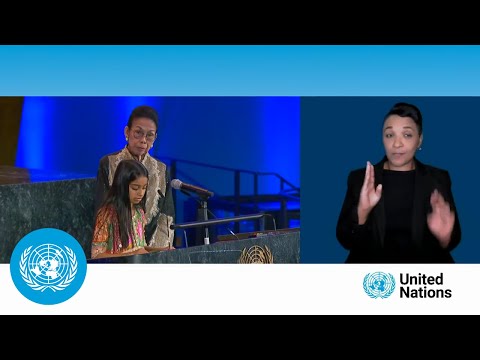
United Nations leaders, survivors and civil society advocates used an International Women’s Day event at UN headquarters on March 8 to press for faster action on gender equality and to spotlight gaps in protection, political representation and access to technology.
United Nations Secretary-General António Guterres opened the program by citing longstanding gains and persistent threats to women’s rights, and he framed gender equality as central to peace and development. “We gather today not just to celebrate the International Women’s Day, but to move forward, resilient, united, and wavering in our pursuit of ... equality, development, and peace for all women everywhere in the interest of humanity,” Guterres said.
The program brought together UN officials, Goodwill Ambassadors and advocates who underlined several recurring themes: rising gender-based violence, a widening gender digital divide, threats to girls’ education in conflict-affected settings and the need for better-funded, locally led responses.
Why it matters: speakers said progress since the 1995 Beijing conference remains incomplete and, in some places, is being reversed. The event coincided with the 30th anniversary of the Beijing Declaration and Platform for Action and the 25th anniversary of United Nations Security Council Resolution 1325, and UN officials used the platform to announce renewed internal commitments and call for global policy follow-through.
Among the statistics cited at the event: women now hold about 27% of parliamentary seats worldwide, up from roughly 10–11% fifty years ago; a widely reported figure given during remarks said roughly one in three women — about 736,000,000 people — experience physical or sexual violence in their lifetime. The secretary-general and other speakers also warned that, at current rates, gender parity in legislatures could be delayed for decades.
Speakers highlighted targeted issues and interventions. Roya Mahboob, an Afghan tech entrepreneur, described how access to computers and digital skills transformed her life and warned that Afghan girls have been denied secondary education for years: “Their schools remain closed, their screens dark, their future is stolen, and their voice silenced,” she said, urging expanded digital education and internet access for girls.
Jaha Dukureh, UN Women’s Goodwill Ambassador for Africa, described community-based efforts that link ending female genital mutilation to economic opportunity and regenerative agriculture. “Through education, economic empowerment, and leadership, we are proving that change is possible,” Dukureh said, calling for investments that enable girls and women to choose alternatives to harmful practices.
Aly Raisman, a U.S. Olympic champion and survivor-advocate, recalled decades of abuse by a serial predator and urged institutions to believe survivors and deliver accountability. “Predators thrive in silence,” Raisman said. “We must listen. We must believe. We must demand accountability without regard for power.”
A youth climate and gender activist who spoke said women and girls face disproportionate harms from climate change and receive a tiny share of climate finance: “Currently, just 3% of all official development assistance on climate had gender equality related objectives,” she told the audience, calling for gender-responsive climate finance and inclusion of young women in decisionmaking.
UN leaders at the event reiterated commitments and new initiatives. The secretary-general highlighted the United Nations’ gender equality acceleration plan and a “gender equality clarion call” intended to mobilize unified leadership, counter backlash, coordinate impact and protect human-rights defenders. UN Women Executive Director Sima Bahous echoed the urgency of turning pledges into funded programs and concrete protections.
The program mixed testimony, policy appeals and creative performances — including a musical excerpt and dance — as organizers aimed to connect personal stories to global policy demands. Organizers and speakers repeatedly urged donors, governments and multilateral lenders to increase investments so legal commitments translate into services, enforcement and education.
Looking ahead, veteran negotiators and young activists said the next major milestones include CSW 69 and ongoing efforts to implement Agenda 2030 and the Pact for the Future. Several speakers closed by urging sustained action rather than symbolic gestures: “The choices we make now, they are permanent marks on history’s pages,” Bahous said.
No formal decisions or votes were taken at the event. The program functioned as a convening to spotlight progress, gaps and proposed priorities for governments, donors and civil society.