Get Full Government Meeting Transcripts, Videos, & Alerts Forever!
Get email alerts on the Executive Session Rules topic
No spam. Unsubscribe anytime.
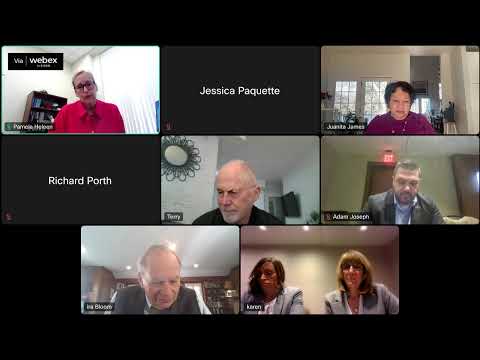
CSCU committee reviews executive‑session rules and agrees to list "executive session anticipated" on agendas
Summary
Legal staff reviewed Connecticut FOI constraints and executive‑session rules with the Governance and Nominations Committee. The committee agreed to adopt a practice of listing "executive session anticipated" on agendas and to rely on staff to ensure any executive session meets statutory exemptions and documents invitee lists.
Committee members discussed the conditions under which the Board of Regents may enter executive session and how to create regular opportunities for private board discussion without violating state open‑meetings law.
Karen, a system staff member who summarized the statutes, reviewed common FOI exemptions and cautioned the committee that the Freedom of Information Commission reads executive‑session rules strictly. "I came across 1 decision which they talked about a pending claim or pending litigation and the lawyer was invited into executive session and the FOI commission determined that the lawyer should have left the executive session at the point that they were no longer being asked questions," Karen said, noting the importance of naming invitees and the specific statutory reason for each executive session.
Karen and Pam also explained permissible executive‑session subjects: discussion of draft confidential documents, personnel matters (appointment, termination, or performance) where the affected individual is notified and may request a public session, and pending litigation where legal counsel provides privileged advice.
Board members raised two practical concerns: whether the nonvoting, ex officio members (including certain statutory region representatives) must be invited to executive sessions, and how to avoid creating the appearance of secretive governance by routinely going into closed session. Karen said ex officio nonvoting members are defined by statute as members of the Board and cautioned against excluding them without clear justification.
The committee agreed to a procedural approach: include a line on board and committee agendas indicating "executive session anticipated" and staff will remove that line if no statutory reason exists at the time of the meeting. Members also encouraged continued informal post‑meeting lunches or other social time where board members may exchange views on meeting process so long as no board business is decided in those informal settings.
Ending: No new executive session policy language was adopted; staff were asked to draft suggested agenda language and procedures to ensure compliance with FOI rules and to present that language at the next meeting.