Get Full Government Meeting Transcripts, Videos, & Alerts Forever!
Get email alerts on the Developmental Services topic
No spam. Unsubscribe anytime.
DDS outlines Southbury Training School staffing, supportive-housing expansion and Social Security assistance efforts
Summary
Department of Developmental Services told the Appropriations subcommittee the Southbury Training School census has fallen to 97 with a staffing complement of 395 full-time and 35 part-time staff, described steady growth in supportive-housing developments, and said it has begun a program to help DDS clients apply for or maintain SSI/SSDI benefits
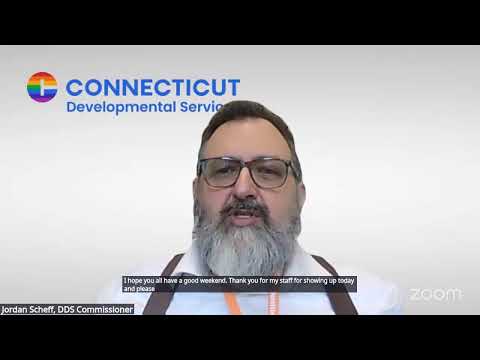
The Commissioner, Department of Developmental Services told the Appropriations Subcommittee that Southbury Training School (STS) currently has a census of 97 residents supported by 395 full‑time and 35 part‑time staff. The commissioner said the STS campus contains 120 buildings, 45 of which remain in operational use.
The commissioner told the committee the department reduces on-site staffing and deactivates cottages as census declines, noting some campus infrastructure and maintenance costs remain fixed despite lower resident counts. The department said three STS residents were actively transitioning to community living arrangements at the time of the presentation and that it plans to schedule stakeholder meetings about the facility within the next month.
On home‑care and community supports, DDS reported 6,258 active personal care attendants (PCAs) enrolled with the department’s fiscal intermediary for DDS-funded services as of Feb. 21. The department provided a multi-line accounting of residential and day-services funding changes across fiscal years and said it would follow up with additional detail when requested.
DDS described a growing supportive-housing effort that partners with the Connecticut Department of Housing and private developers. Deputy Commissioner Alisa Vilardo told the committee there are nine supportive-housing developments currently open, 11 in development and nine pursuing funding—29 projects total—and that “well over a hundred” DDS-eligible individuals are already in supportive housing. DDS said developers secure housing subsidies and the department caps DDS placements at no more than 25% of a development’s units; developers and federal funding rubrics typically determine project locations.
On emergency placements and transitional units, DDS explained the “emergency placements” SID funds a mix of regional family-support teams, emergency transitional housing units, a six‑bed step‑up/step‑down unit for people leaving or avoiding hospitalization, and clinical response teams providing mobile outreach. The department said historically it averaged slightly more than 100 emergency placements per year but has used these flexible funds to avoid some crises becoming long‑term emergencies.
DDS reported on a targeted program for individuals with caregivers aged 65 or older: 571 people with caregivers 65+ have received residential supports since FY23, and 29 individuals with such caregivers have authorized funding and are awaiting placement. The department emphasized the caregiver‑age initiative aims to prevent crises by arranging timely residential supports rather than waiting for emergency declarations.
On benefits and federal administration risks, DDS said it recently rolled out a formal assistance program to help eligible individuals apply for and maintain Social Security benefits (SSI/SSDI). Krista Ostaszewski, health management administrator, told the committee DDS-trained staff have assisted about 75 individuals so far and that the department is building capacity to expand that work; DDS said it has not received any official notice of imminent federal benefit cuts but is modeling scenarios and preparing contingencies.
DDS asked the committee to request follow-up meetings for a deeper review of STS operations and cost drivers; the commissioner’s office said staff would share the Messier settlement agreement and other documentation to inform deliberations.
Ending: DDS did not record any formal votes during its presentation. The department committed to follow up with more detailed fiscal breakdowns on residential and day services, a town-by-town listing of community placements, and scheduling stakeholder meetings on STS.