Get Full Government Meeting Transcripts, Videos, & Alerts Forever!
Puerto Rico education committee reviews bill to designate unused schools as shelters for people with medical needs
Summary
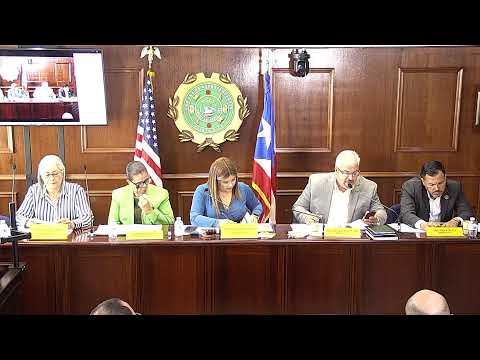
The Commission on Education of the House of Representatives of Puerto Rico held a public hearing Friday, March 7, on Proyecto de Cámara 32, a measure that would require the secretary named in the bill to evaluate public schools identified as "en desuso" (out of use) and designate at least one such school per municipality or emergency zone to serve as a shelter for families that include a person who needs special medical or health care.
The Commission on Education of the House of Representatives of Puerto Rico held a public hearing Friday, March 7, on Proyecto de Cámara 32, a measure that would require the secretary named in the bill to evaluate public schools identified as "en desuso" (out of use) and designate at least one such school per municipality or emergency zone to serve as a shelter for families that include a person who needs special medical or health care.
The Department of Health and other agencies offered technical recommendations but warned the committee that the proposal would require funding, staffing and interagency coordination to function as written. Víctor Ramos Otero, the secretary-designate of the Department of Health, said the department supports inclusive sheltering but cautioned that the facilities called for in the bill should not be treated as full medical shelters. "Al igual que las mejores prácticas para habilitar refugios de emergencia enfatizan que estos espacios deben ser inclusivos," Ramos Otero told the commission, adding that shelters must accommodate people with disabilities, people with pets or service animals, tourists and people regardless of immigration status.
Ramos Otero and Sherly Squiling, director of the Division of Preparedness and Coordination for Public Health Response, outlined practical requirements the bill would trigger. They recommended that designated sites be near neighborhoods at higher risk and not sited in areas prone to flooding, storm surge or landslides; that buildings meet accessibility standards such as the Americans with Disabilities Act (ADA); and that shelters possess reliable power and water…
Already have an account? Log in
Subscribe to keep reading
Unlock the rest of this article — and every article on Citizen Portal.
- Unlimited articles
- AI-powered breakdowns of topics, speakers, decisions, and budgets
- Instant alerts when your location has a new meeting
- Follow topics and more locations
- 1,000 AI Insights / month, plus AI Chat