Get Full Government Meeting Transcripts, Videos, & Alerts Forever!
Get email alerts on the Behavioral Health Crisis Center topic
No spam. Unsubscribe anytime.
Mental‑health department seeks staff and $7.25 million contract to open crisis stabilization center
Summary
Loudoun’s Department of Mental Health, Substance Abuse and Developmental Services requested staffing and an operations contract to open a receiving and stabilization center and asked for support‑coordination positions to enroll residents in developmental-disability waivers as state expansions proceed.
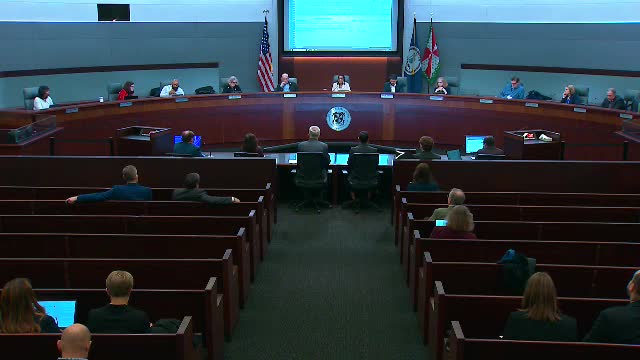
Margaret Graham, director of Loudoun County’s Department of Mental Health, Substance Abuse and Developmental Services (MHSADS), told the Board of Supervisors on March 6 that the department has reorganized into six programs and is seeking staff and funding to stand up behavioral‑health crisis services and to support an anticipated enrollment surge in developmental‑disability waivers.
Graham asked the board to fund one administrator position and $7,250,000 in FY26 to award an operations contract for a crisis receiving and stabilization center through a competitive RFP, with a planned operational opening in mid‑2027. The department described the timeline: award contract January 2026, recruit and train staff through June, and begin services approximately July 1, 2027.
Graham also asked for 11 support‑coordination positions and two reimbursement positions to manage increased waiver enrollment. The state’s Right Help Right Now initiative is expanding waiver availability statewide, and Graham said the county must build case‑management capacity to enroll and serve people; case management is a billable Medicaid service but requires up‑front staffing to get people enrolled.
The department reported that 14 of 15 FY25 positions had been filled and that construction on the stabilization center has begun. Supervisors asked about contractor availability to operate a crisis facility and about the co‑responder program; Graham said the co‑responder pilot (launched July 2024) is operating and the department will report later on its progress.
Graham also requested a permanent opioid response program coordinator to build on temporary efforts and to plan use of opioid‑abatement settlement funds. The board discussed funding timing and the need to ensure recruitment and contractor availability align with the projected opening schedule.
Supervisors asked clarifying questions about whether state funding covered support positions for waivers; Graham said the Right Help Right Now initiative established waivers but did not directly fund county case‑management positions needed to enroll residents, which is why MHSADS is requesting local support staffing now.