Get Full Government Meeting Transcripts, Videos, & Alerts Forever!
Get email alerts on the Homelessness topic
No spam. Unsubscribe anytime.
City administrator: closure and cleanup of encampments follows longstanding protocols; shelters and new buildings offered as alternatives
Summary
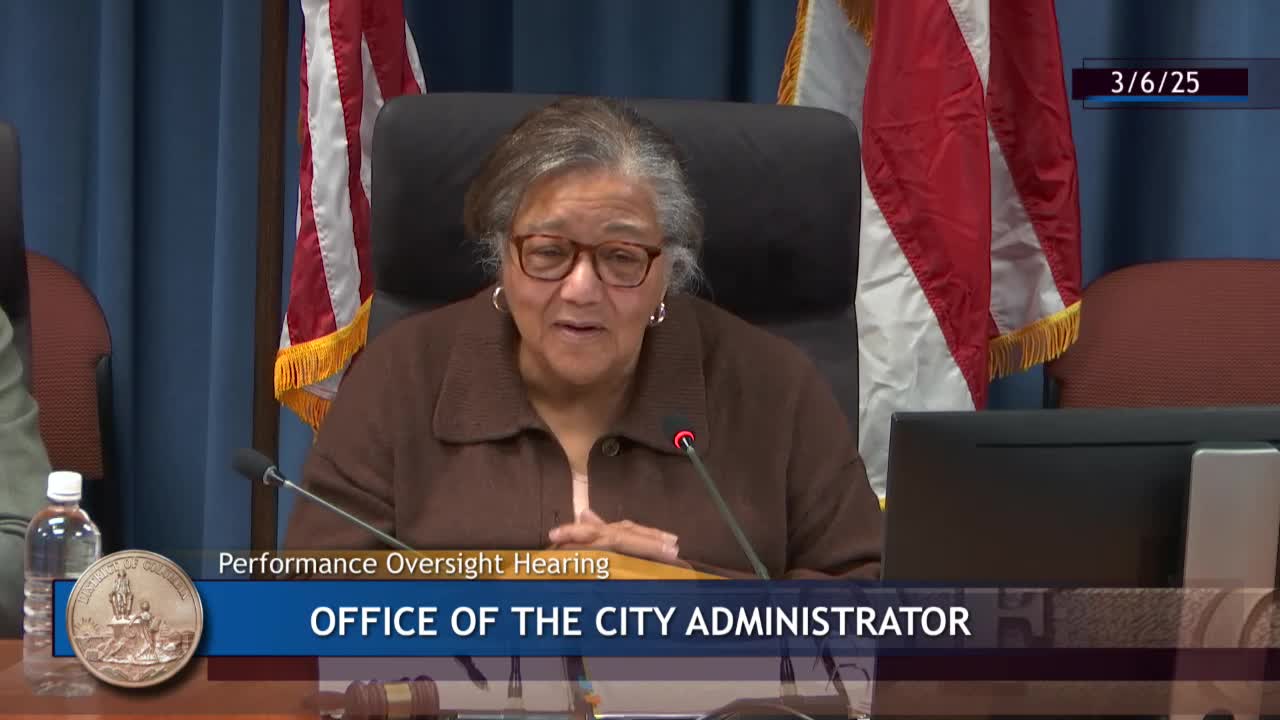
City Administrator Kevin Donahue told the committee the District follows an established protocol for closing and cleaning homeless encampments and that the city pairs closures with shelter offers, case management and new housing conversions such as the Aston.
City Administrator Kevin Donahue told the Committee on Executive Administration and Labor that the District has a longstanding protocol for closing and cleaning homeless encampments and that those closures prioritize encampments that pose health and safety risks.
He said encampment closures are led by the Deputy Mayor for Health and Human Services with support from the Department of Human Services (which provides outreach and case management), the Department of Public Works (which provides cleanup), and nonprofit outreach partners. For encampments on federal land, Donahue said the National Park Service and Park Police lead closures on federal property while the District provides human services and may remove debris afterwards.
Donahue described shelter capacity and housing conversions intended to move people from encampments into longer‑term housing. He said the city currently had ‘‘probably at least 200 beds available’’ and highlighted investments such as the Aston — a downtown building converted to house about 50 people with capacity for about 100 — and a forthcoming E Street facility in the NoMa area that he said will offer about 190 beds with on‑site services and will prioritize individuals coming directly from encampments.
Why it matters: Donahue framed encampment management as both a public‑safety and human‑services exercise: closures are followed by offers of shelter and onsite casework, and the city is investing in conversion of buildings to house people who decline low‑barrier shelter beds.
Details and process • Protocols: The mayor authorized funding to expand DPW cleanup crews (initially 40 hires, later expanded to 80) to maintain high‑visibility corridors; the city distinguishes these clean‑up crews from encampment closures led by the Deputy Mayor for Health and Human Services.
• Shelter offers and supports: Donahue said the city routinely offers shelter beds at closures and has case management available; he cited recent investments to renovate a downtown low‑barrier shelter and to open conversion projects that include onsite services and caseworkers.
• Federal‑property coordination: Donahue said federal land closures are led by NPS and park police; the District provides human services outreach and, where needed, debris removal.
Ending Donahue said outreach and on‑site services have helped reduce the number and size of encampments compared with prior years and flagged the Aston and the upcoming E Street project as investments to move people directly from encampments into housing. The committee said it will seek follow‑up details about the city’s protocols and coordination with federal partners.