Get Full Government Meeting Transcripts, Videos, & Alerts Forever!
Get email alerts on the Eviction Reform topic
No spam. Unsubscribe anytime.
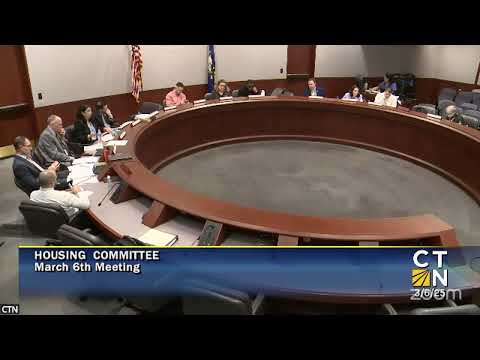
Housing committee advances eviction-overhaul debate after hours of amendments
Summary
Connecticut House and Senate members of the joint Housing Committee debated and amended House Bill 6889 on "evictions for cause," approving a 13th‑month protection while rejecting several proposed extensions; lawmakers flagged drafting issues and procedural questions during a marathon session that also considered dozens of other housing items.
HARTFORD — After a day and night of debate, the state Housing Committee spent the committee’s largest single block of time on House Bill 6889, an overhaul of "evictions for cause" protections that drew repeated questions about drafting, unintended consequences and how the new rules would work in practice.
The committee approved one substantive change that will be folded into the bill: an amendment that creates a 13th‑month threshold at which certain tenants move into a month‑to‑month posture and become eligible for the bill’s just‑cause protections. Several other proposed changes — including amendments that would have delayed the start of protections to 24 months or otherwise altered the wording — failed on roll calls.
Why it matters: The measure is aimed at expanding tenant protections for long‑term occupants, while balancing landlords’ interests in property management and the ability to act when tenants violate lease terms. Members and staff repeatedly warned that drafting choices — notably the difference between "resided" and "paid" in the bill’s residency language — change how protections apply in day‑to‑day situations such as first leases, renewals and tenants who remain in units after a lease expires.
What the committee did: After more than an hour of technical discussion about the single sentence that would define the residency trigger, the committee considered several amendments. Two amendments that sought larger changes to the residency window (including one that would have extended protection to 24 months) failed on roll calls. A subsequent oral amendment to change the trigger to a 13th month passed by voice vote and was folded into the substitute language before the bill moved forward for further consideration.
How members framed the debate: Representative Scott, who spoke at length, argued the existing draft did not match the sponsors’ intent and warned the uses of the word "resided" could create unintended coverage for tenants who simply remain physically present after a lease term without having a clear renewal or payment. "That 'resided' word is a massive problem," he told colleagues, urging clearer text that tracks payment and renewal rather than mere presence.
Other members described the bill through different lenses. Senator Sampson said he supported stronger tenant protections but pressed for measures that would not "chill" the rental market or push small landlords out of the business; he urged clearer, enforceable standards so landlords and renters both know where they stand. In support, Senator Marks and several other committee members said the proposal responds to rising housing insecurity nationwide and noted the committee’s intention to continue working the language in follow‑up meetings.
Process and drafting concerns: Committee members repeatedly underscored drafting and implementation problems. They pointed to confusion over definitions (for example, whether an occupant needs to have paid a 13th month’s rent or merely exist in the unit for 13 months to trigger protections), and asked staff to clarify how the bill would interact with existing statutory protections for seniors and persons with disabilities. Several members asked for clearer cross‑references and for the sponsor to consult Legislative Counsel Office (LCO) drafting staff during the remainder of the JF process.
What the amendment did: The 13th‑month amendment adopted by the panel means a tenant who remains in a unit and begins an oral, month‑to‑month tenancy after a 12‑month lease would receive just‑cause protections at the start of the 13th month — allowing a brief period for landlords to undertake a lapse‑of‑time process before those protections attach. Sponsors said the change was meant to permit landlords a short window to decide on renewal without immediately losing the ability to rely on lapse‑of‑time procedures.
Quotes: "We're here to get this stuff done. Some of these bills will die. But we're giving people their day to negotiate," said the committee chair during opening remarks.
"That 'resided' word is a massive problem," Representative Scott said after reading the text aloud, arguing the draft would incorrectly confer protections based on mere presence rather than the payment/renewal structure he expected.
What’s next: The bill was advanced for further consideration in the committee process with the 13‑month language incorporated; committee members said they expect additional drafting tweaks will follow. Sponsors and staff signaled they will work with LCO to correct ambiguous phrasing before the measure reaches the full chamber.
Context and impact: The eviction‑related discussion took place amid a packed agenda — the committee considered three dozen housing concepts and several other bills during the day — and members repeatedly said they planned follow‑up work on several measures. The debate illustrated the tradeoffs lawmakers face in tightening tenant protections while avoiding unintended effects that could reduce housing supply or discourage investment in rental properties.
Ending: Committee members asked staff to circulate clarified language and to return for further votes and discussion. Several members urged careful attention to cross‑references and to make sure the bill’s mechanics reflect sponsors’ intent in writing, not ambiguous wording that could produce unanticipated results.
Votes at a glance: - Amendment (LCO 6063) — proposed change to residency language: failed (roll call vote). - Amendment (LCO 6064) — proposed alternative timing window: failed (roll call vote). - Oral amendment (13 months) — adopted by voice vote and incorporated into substitute language.