Get Full Government Meeting Transcripts, Videos, & Alerts Forever!
Get email alerts on the ATV Road Access topic
No spam. Unsubscribe anytime.
Committee approves referral for bill allowing limited ATV travel on short city stretches of trunk highways
Summary
The Environment and Natural Resources Policy and Finance Committee voted 7–5 to re-refer House File 566, which would give cities under 25,000 the option to allow ATVs on short, posted trunk‑highway segments under specific conditions. Testimony ranged from local economic benefits to MnDOT safety concerns citing a rise in ATV fatal crashes.
A House committee on Wednesday voted 7–5 to re‑refer House File 566 to the Transportation Finance and Policy Committee after testimony that the bill would give small cities discretionary authority to permit all‑terrain vehicles (ATVs) on short segments of trunk highways.
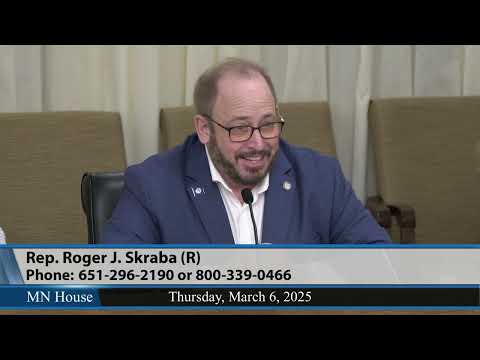
Representative Roger Skraba, the bill author, told the Environment and Natural Resources Policy and Finance Committee that HF566 would give local officials “the authority, not a mandate,” to allow ATVs on short, designated routes on the shoulders of trunk highways where the posted speed limit is 45 miles per hour or less and “there must be no visible viable alternative public routes.” He said the change is aimed at connecting residents and visitors to local businesses and services when state highways run through small towns.
Supporters including Nick Wagnum, secretary of ATV Minnesota, and Ron Potter, president of ATV Minnesota, described the proposal as a way to improve trail and downtown connectivity in small communities. Wagnum recounted examples from Ely and other northern towns and said communities want ways to get riders to restaurants, hotels and other businesses.
MnDOT Assistant State Traffic Engineer Ken Johnson told the committee the agency understands the local desire but warned that “from a traffic safety perspective, we absolutely have concerns about a broad application of this bill as written.” Johnson cited traffic safety goals and crash data: he said there were 23 fatal crashes statewide in 2024 involving ATVs and UTVs, up from 8 in 2023 and 14 in 2022. He said those fatal ATV/UTV crashes compare with 8 bicyclist fatalities and 56 pedestrian fatalities in 2024, and that on trunk highways within cities with speed limits of 45 mph or less there were eight ATV crashes from 2020 to 2024, including one serious injury. MnDOT recommended ditches or backslope operation when possible and urged coordinating with the Department of Public Safety and the DNR on safety measures.
Representative Lee Fisher questioned the bill’s 25,000 population threshold as overly broad for some metropolitan fringe communities; Ron Potter said the figure was chosen based on where issues reportedly surfaced in outstate Minnesota and acknowledged it was not a scientific cut‑off.
The committee proceeded to a roll call. The committee record shows Chair Heintzeman and Vice Chair Buerkle voted yes; Representatives Gilman, Jacob and Nelson voted yes; Representatives Lee Fisher, Falconer, Finke, Hansen and Purcell voted no; Representative Jordan was excused. The committee chair announced the motion carried, 7 yes to 5 no, and HF566 was re‑referred to the Transportation Finance and Policy Committee.
The bill requires a local ordinance before ATVs could be used on a posted trunk‑highway shoulder and applies only to cities under 25,000 population; proponents said the measure is optional for localities and not a statewide mandate. MnDOT and opponents urged tighter safety controls and clarified that lane configuration (multi‑lane segments) and vehicle design raise concerns for mixing slower ATVs with heavier/faster traffic.
The committee’s action is procedural (re‑referral to the transportation committee); it does not open any roads. MnDOT flagged potential increases in crashes if the statute were applied broadly and recommended interagency work before further expansion.
Votes at a glance: House File 566 — motion to re‑refer to Transportation Finance and Policy Committee approved 7–5 (roll call recorded).