Get Full Government Meeting Transcripts, Videos, & Alerts Forever!
Get email alerts on the Public Participation Virtual topic
No spam. Unsubscribe anytime.
Committee discusses limits on virtual public comments after Zoom disruptions; no policy change ordered
Summary
Committee members debated whether to restrict or restructure virtual public comment after recent Zoom disruptions. Public commenters urged retaining virtual participation as an equity access tool. The committee deferred firm policy changes to the council retreat and recommended further study.
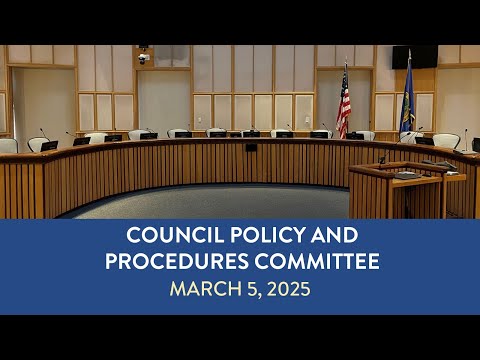
The Council Policies and Procedures Committee discussed whether to change rules for virtual public participation after the committee's recent experience with disruptive anonymous callers during remote public comment.
Staff explained the proposed policy-language additions are intended to give the chair, city manager or IT director discretion to respond quickly to "Zoom bombing" or other disruptions and to codify consistent procedures for hybrid meetings. The staff report noted the city allows three-minute public comments and that emailed comments received by 8 a.m. on the meeting day are read into the record; staff said emails received after 8 a.m. are entered into the record but not read aloud.
Committee members expressed differing views. Some members said removing or restricting virtual public comment could reduce abusive, anonymous disruptions and improve in-person civility. Other members argued virtual participation increases equity and access for parents, workers and people with mobility constraints and that removing it would reduce civic engagement.
During the public-comment portion of the item, three speakers urged the committee not to curtail virtual participation. Bruce England said virtual participation is essential and that disruptive incidents have been rare; he urged the committee not to restrict options for remote commenters. Sylvia Pammer and Emil Abraham said virtual comment enabled them to participate while fulfilling care and work responsibilities and favored preserving the virtual option while improving moderation tools.
The committee did not adopt a formal restriction at the meeting. Members agreed to discuss virtual-comment options at the upcoming council retreat, and staff said the topic would be brought to the retreat and could be referred back to the committee or council for a policy decision. No formal motion or ordinance was adopted on the item during the March 5 meeting.
Staff and the committee discussed potential interim measures including moving non-agenda public comment to the end of meetings, requiring in-person comment for certain special meetings, and clarifying procedures for cutting off disruptive speakers. Committee members requested staff prepare options for the retreat, including a menu of possible policy permutations.
Public comment excerpts
- Bruce England (caller): "I urge you to not entertain the idea" of restricting virtual participation and noted many participants rely on remote access. - Sylvia Pammer (caller): Virtual participation allowed her to jump into the meeting while driving a child to practice and enabled parents and workers to participate. - Emil Abraham (caller): "Virtual comments has opened up, yeah, where I can multitask... I can be at home... and make my voice heard."