Get Full Government Meeting Transcripts, Videos, & Alerts Forever!
Get email alerts on the Civilian Oversight topic
No spam. Unsubscribe anytime.
Syracuse City Civilian Review Board appoints interim administrator, approves training and honorarium
Summary
The Syracuse City Citizens Review Board appointed Don Johnson as temporary administrator, approved a 30-minute training on the board's history, and authorized payment for the trainer pending City Council ratification. Board members discussed backlog of complaints, access to police records and near-term staffing needs.
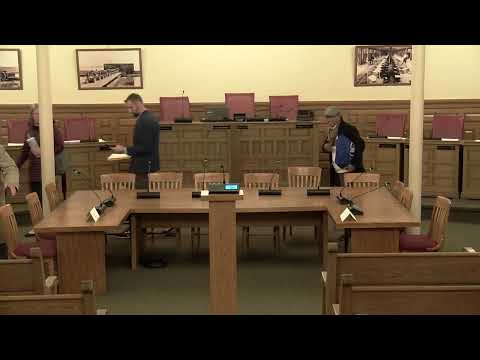
At a meeting of the Syracuse City Citizens Review Board at Syracuse City Hall, members voted to appoint Don Johnson as a temporary administrator and approved a 30-minute historical/training presentation by a invited trainer identified in the meeting as Barry. The board also voted to authorize payment for the trainer, subject to later City Council ratification.
The action comes as the board continues work to restore regular operations after a period without a permanent administrator. Don Johnson, who was serving in a public-facing clerk role, reported that seven people had contacted the office about filing complaints since he began working there on Jan. 29 and said complaint forms have been distributed to those callers. "Those forms have been sent out to those individuals, and 1 individual is gonna do it online," Johnson said during his status report.
The board's chair, Bridal Lovejoy Cornell, framed the immediate need for an administrator as a practical barrier to case processing: without an administrator to receive and forward case recommendations, the police Office of Professional Standards may decline to process or share investigatory materials the board needs. "If we send a complaint up to the ops department, they're gonna send it back and say, you don't have an administrator, so we don't have to look at this case," a board member summarized during discussion. The board voted to name Johnson to that temporary role to remove that obstacle.
Why it matters: the board discussed time-sensitive limits on complaint handling and how gaps in staffing and technology have slowed investigations. Johnson said some city invoices and budget items are being addressed and that budget submission deadlines are impending; he recited March 18 as the date for submitting budget information. He also said the temporary clerk position is currently a 20-hour-per-week clerical role as set by the city's hiring rules.
At the meeting, an invited presenter identified as Barry delivered a roughly 30-minute history of Syracuse's civilian review board model, summarizing decades of legal and operational changes, including a 2011 revision to the enabling legislation. Barry said the board's model includes parallel investigations with the police Internal Affairs/Office of Professional Standards and described several legislative fixes adopted in 2011 to help the board obtain investigative files without relying on subpoena power. "External review must be combined with a number of different mechanisms to have true accountability," Barry said.
Board members debated the timing and scope of training versus the need to repair internal infrastructure. Several members urged more internal planning before bringing outside trainers; others moved to hear the presenter that same evening. A motion to proceed with Barry's presentation passed, and a later separate motion to pay $250 for the trainer also passed, with board members noting the city's procurement rules require that honoraria generally be submitted before the event and that post-event payment will need City Council ratification.
Public comment: Jose Marrero, who identified himself as a resident and a former board member, urged the board to prioritize hiring a permanent administrator so the office can operate "fully staffed and fully operational," saying the board's capacity affects residents who file complaints.
Formal actions and next steps: the board approved draft minutes from its prior meeting, voted to appoint Don Johnson as temporary administrator and approved payment for the trainer; members also scheduled a training on open meetings law for the next month, to be delivered by the board's attorney at no cost. The board moved into executive session after the public portion of the meeting to discuss personnel and other matters.
What remains unresolved: board members repeatedly emphasized the need for clearer processes to hand complaints to investigators and to receive Office of Professional Standards files. Johnson said some older complaint records should be on a shared drive but access and continuity gaps remain after the prior administrator left. The board also discussed training needs in three categories: internal board processes, analysis of police policy and conduct, and applicable law such as the state's Open Meetings Law.
Ending: after the executive session the board planned to reconvene briefly to adjourn; members said they would notify the police department of the temporary administrator appointment and follow up with City Hall to secure the honorarium payment through the council if required.