Get Full Government Meeting Transcripts, Videos, & Alerts Forever!
Get email alerts on the School Improvement topic
No spam. Unsubscribe anytime.
Jackson school trustees review attendance and reading data for CSI/TSI schools; district to target teacher-level supports
Summary
Administrators told the board that a winter increase in short-term absences reflected illness, while reading proficiency showed mixed results across targeted schools; district coaches will provide individualized support to teachers.
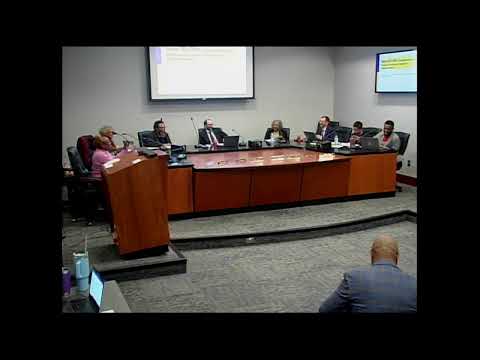
Jackson Public School District leaders told the Board of Trustees on March 20 that a recent uptick in short-term absences reflected illnesses such as strep and influenza and that reading (ELA) benchmark results showed mixed teacher-level performance across several comprehensive and targeted support schools.
Doctor Laesch (Director of Federal Programs) and Dr. Buchanan presented the school improvement update and said the district reports chronic absenteeism in two ways: a month-level indicator showing students missing two or more days in a month, and a cumulative definition based on missing at least 10% of the school year. The presenters said the month‑by‑month measure rose in January largely because of illness but that cumulative chronic absenteeism improved districtwide.
On elementary and middle‑school reading performance, Dr. Buchanan said there was not a single, clear cause for benchmark declines. He told trustees that within the same school some teachers showed gains while others showed declines; the district has identified subsets of teachers whose implementation of the ELA curriculum varies and will focus coaching and supports at the teacher level.
"We do see variations in implementation of that curriculum," Dr. Buchanan said, and district coaches will "hone in on supports for those specific teachers," he added. Trustees pressed whether meeting short‑term goals would remove schools from improvement lists; staff said schools must show sustained progress over a three‑year window to change identification status.
Board members had no immediate action on the item; the presentation was listed as an information update. District staff said the report covered January data (districts typically report on a month with a one‑month lag) and described next steps as intensified coaching, analysis of teacher practice differences and targeted supports for teachers whose data indicate a decline.