Get Full Government Meeting Transcripts, Videos, & Alerts Forever!
Get email alerts on the Waste Transfer Station topic
No spam. Unsubscribe anytime.
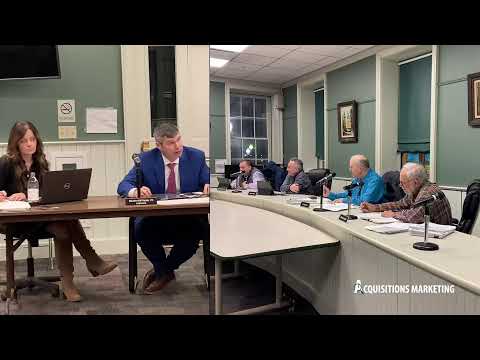
Goshen planning board asks for traffic, stormwater and off-site safety fixes as IWS seeks Chapter 80‑b operating permit modification
Summary
The Goshen Planning Board took up an application related to the IWS Goshen Transfer Station’s Chapter 80‑b solid waste management permit, which seeks to increase permitted throughput from 600 to 670 tons per day and to discontinue on‑site recyclables processing.
The Goshen Planning Board took up an application related to the IWS Goshen Transfer Station’s Chapter 80‑b solid waste management permit. The applicant seeks continued operation and a modification to increase permitted throughput from 600 to 670 tons per day and to eliminate 70 tons per day of recyclables from the facility’s on‑site processing; recyclables, the applicant said, will be processed at a new facility in North Arlington, New Jersey.
Kelly (planning staff) explained the board’s role in reviewing the Chapter 80‑b referral and focused members on four planning items the board should evaluate: neighborhood compatibility, safety of vehicular access and egress, adequacy of interior circulation and parking with attention to pedestrian and vehicle safety, and transitional landscaping and setbacks. Kelly said the town board had determined a Chapter 80‑b permit was required and that the Planning Board’s comments would form a referral to the Town Board.
Board members raised multiple technical concerns during the discussion. The planning consultant’s summary (Cornerstone Report) shows nominal inbound tonnages of 588 tons and outbound summaries near 549.96 tons for a sample date, which board members said created an unexplained discrepancy. Board members also noted the consultant reported an increase of 48 vehicle trips per day associated with the permit modification (96 trip ends) and said that increase could raise safety issues at the Hartley Road/Route 17M intersection.
On-site and operational questions addressed to the applicant included where the 65,000-gallon fire-protection water tank would be filled (the applicant said the tank would be filled off-site and that an on-site well serves domestic needs in the office); whether inbound loads are screened for hazardous materials (the applicant said detectors are used); and whether routing software forces trucks onto weight‑restricted roads. The applicant said routing is software-directed and that drivers are instructed to avoid weight‑restricted roads except where pickups require it.
Several board members urged the town and applicant to work with the New York State Department of Transportation on the Hartley Road/Route 17M intersection. Commissioners said transfer-station trucks currently swing off the pavement by up to 10–12 feet to make the right turn and that adding up to 48 daily trips could worsen a hazardous condition. Board members asked whether off‑site improvements or town coordination with DOT could be pursued before permitting an operational increase.
The board also discussed stormwater, noting a past EPA violation for runoff at the facility and asking for clarification whether new site work includes ponds or other on‑site treatment; planning staff said stormwater control is commonly addressed at the site‑plan phase but that the board should flag erosion/runoff as a material concern in its referral.
After discussion, the board voted to authorize drafting a report to the Town Board that will record the planning board’s comments and the concerns raised that evening. Planning counsel will prepare a letter/report reflecting the items discussed; the motion was seconded and carried. The board intends to provide a report within the time period allowed under Chapter 80‑b and asked staff to circulate a draft internally before it is sent to the Town Board.
Why it matters: the permit modification would increase inbound waste tonnage and truck traffic at a facility that abuts a state route and local roads; the planning board’s referral could prompt DOT review or additional conditions the town board might attach to the Chapter 80‑b permit.
Next steps: planning staff and counsel will draft the planning board report for the Town Board reflecting the items discussed — traffic and intersection safety (Hartley Road/Route 17M), the inbound/outbound tonnage discrepancy, stormwater management and erosion control, routing and weight‑restricted roads, and documentation of off‑site mitigation options. The board invited members who missed the meeting to comment at the next meeting.