Get Full Government Meeting Transcripts, Videos, & Alerts Forever!
Get email alerts on the Social Services topic
No spam. Unsubscribe anytime.
City’s Family and Community Support Program reports 253 service requests in 2024; housing needs dominate demand
Summary
Derek Elder, Seaside's family and community support practitioner, told council the mobile crisis program recorded 253 service requests in 2024 (84 mobile crisis, 169 outreach/referrals) and that housing and basic‑needs issues were the largest single category of calls; he described partnerships, service gaps and county coordination efforts.
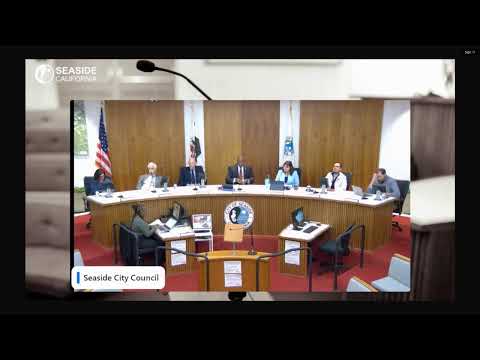
Seaside, Calif. — Derek Elder, Seaside’s family and community support practitioner, delivered an annual update on March 6 showing sustained demand for mobile crisis response and community referrals and reporting that housing and basic‑needs issues comprised the largest share of requests in 2024.
Elder said the program — a mobile crisis response and linkage service embedded in the city — handled 253 total service requests in 2024: 84 mobile crisis calls and 169 community outreach/referral requests. He said the program has handled varying annual totals since its 2021 start, noting 91 mobile crisis calls and 181 other requests in 2021; 88 mobile crisis calls and 117 outreach requests in 2022 (305 total); and 68 mobile crisis and 226 outreach requests in 2023 (294 total). Elder said many cases involve multiple, overlapping social determinants and that brief case management and linkage remains the program’s core function.
Why it matters: Elder emphasized housing and basic needs as the program’s largest category of contacts. He told the council that cases range from eviction prevention and rental or utility assistance to habitability concerns affecting older adults. Elder said 58 percent of 2024 contacts involved mental‑health or substance‑use challenges; 33 percent related to family, domestic‑violence or neighborhood disputes; about 90 percent were connected to housing and basic needs in some way; and 26 percent of calls involved youth and transitional‑age populations (24 and under).
Numbers and service detail Elder reported
- 2024 totals: 84 mobile crisis requests and 169 outreach/referral requests for 253 total requests.
- Domestic violence: Elder reported 18 total calls in 2024 identified as domestic‑violence related, with referrals originating from the community (9), police department (6), other service providers (2) and city staff (1).
- Timing and populations: Roughly 32 percent of service requests occurred between 9 a.m. and noon, 32 percent between noon and 3 p.m., 23 percent from 3–6 p.m., and smaller percentages later in the evening; 74 percent of requests were for adults (25+) and 26 percent for youth/transitional age (24 and under).
Service gaps and partnerships
Elder said shelters remain limited for some populations (domestic‑violence survivors, older adults and single men) and transportation to county services can be a barrier. He said the program partners with Echo Housing for eviction/legal clinics, participates in county commissions (behavioral health, community action) and hosts annual resource fairs (the next resource fair was announced for May 17 on the Laguna Grande Park lawn).
Council members thanked staff and asked for information on program metrics as part of ongoing budget discussions. Elder noted the program provides Spanish‑language services and that the team coordinates closely with police, fire and community partners.
Speakers: Derek Elder, Family and Community Support Program practitioner.
Ending: Elder said the program will continue outreach, track service gaps and coordinate with county partners to improve intake timeliness and shelter access; he also noted plans for additional community‑engagement events.