Get Full Government Meeting Transcripts, Videos, & Alerts Forever!
Get email alerts on the Emergent Bilinguals Esol topic
No spam. Unsubscribe anytime.
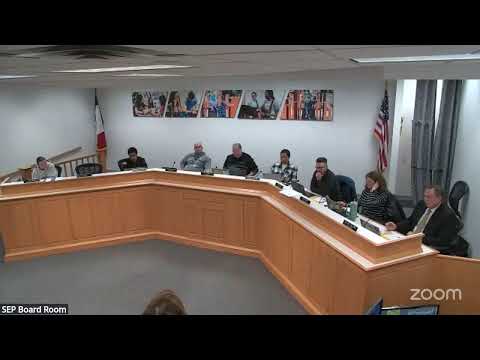
Southeast Polk reports growth in emergent bilingual students, wins grants for translation technologies
Summary
District staff reported a rise in emergent bilingual enrollment, described program staffing and supports, and announced a Meta-funded grant for headsets and interpretation devices to improve family engagement and in-person interpretation options.
Dr. Laird, the districts Learning Supports Coordinator, told the board the number of emergent bilingual students has grown substantially and described the districts ESOL supports, staffing and recent grant awards.
Dr. Laird said the ESOL enrollment figure on the presentation was 466 based on the prior Fridays count and that she had added four more students that morning, noting the number used in slides reflects the last official count. "Within our ESOL program ... we really work on 4 language domains, so speaking, listening, reading, and writing," she said.
She told the board the district has 12 teachers and two program associates supporting emergent bilingual students and that 128 students are currently classified as "emerging" while the remaining 336 are "progressing" on state language proficiency measures. Dr. Laird said students who demonstrate proficiency in all four domains on the ELPA21 assessment are exited from the program and then monitored for two years.
On technology and family engagement the district recently won a Meta grant, Dr. Laird said, that will fund six personal headset sets and interpretation hubs. She described a headset model that allows interpreters to transmit real-time language audio for parents at meetings and a stand-alone interpretation device for front offices that does not require external apps. The devices are intended to expand access for families speaking Spanish, Vietnamese, Swahili, Arabic, Dari and other languages the district serves.
Board members asked about interpreter availability for less-common languages; Dr. Laird said the district uses multiple local agencies and a language-line provider (TransPerfect) for phone/remote interpretation when needed, and that Dari has been hardest to secure locally.
Dr. Laird said the district has a task force of teacher leaders across elementary, middle and secondary buildings to provide professional learning, coaching and instructional tools in line with research on linguistically supportive instruction.