Get Full Government Meeting Transcripts, Videos, & Alerts Forever!
Get email alerts on the Parks Recreation topic
No spam. Unsubscribe anytime.
Carson City approves encapsulated rubber infill for Centennial Park softball fields
Summary
Parks staff recommended two infill options for the John D. Winters Centennial Park upper softball fields. After a presentation and public comment, the Board directed staff to proceed with encapsulated rubber infill and to put the project out to bid.
Carson City supervisors on Thursday directed staff to move forward with encapsulated rubber infill for the upper softball fields at John D. Winters Centennial Park, clearing the way for bid documents to be prepared.
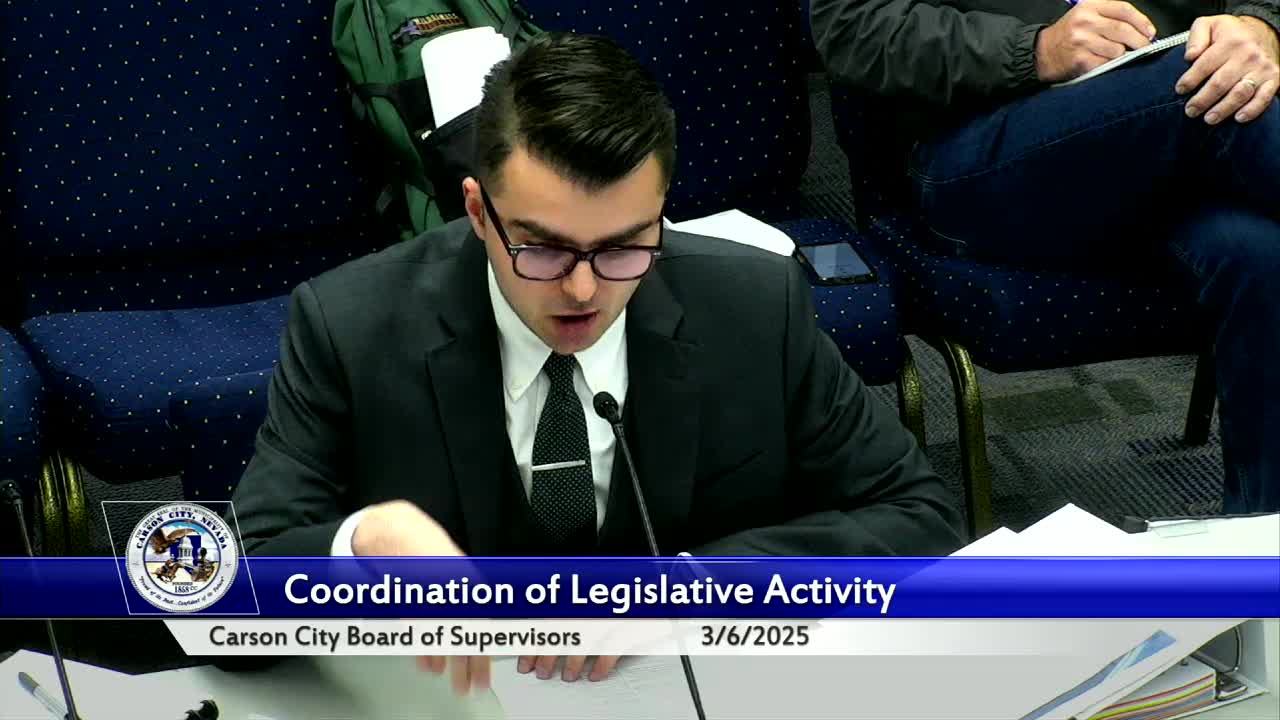
Nick Wentworth, Carson City parks project manager, presented alternatives to traditional crumb rubber and said the department narrowed choices to two feasible options: a natural infill (walnut husks were the preferred natural product) and encapsulated rubber — rubber particles coated with urethane to reduce emissions and particle release. Wentworth said the natural options would add about $600,000 to construction costs and would require more frequent replenishment and a shock‑attenuation underlayment mat; encapsulated rubber carried a smaller long‑term replenishment cost and avoided some of the maintenance and decomposition concerns linked to organic infill.
Anthony Stevenson, principal with Lloyd Consulting Group (the city’s turf engineering consultant), told supervisors that the project design includes underlayment mats to meet drainage and shock attenuation requirements and that encapsulation can reduce exposure compared with traditional crumb rubber. He also said that synthetic‑turf heat concerns in Carson City are much less severe than in desert climates, where extended extreme temperatures can markedly raise surface temperatures.
Public commenters urged more study and raised concerns about allergies, herbicide needs for organic infill, and long‑term turf degradation. Denny French, a Carson City resident, asked that the board consider environmental and health tradeoffs and the life span of different infill choices.
Supervisor Geomey moved to direct staff to proceed with the John D. Winters Centennial Park project using encapsulated rubber for the upper softball fields; the motion was seconded and passed unanimously.
Why this matters: city staff said either choice would require additional capital beyond the existing budget; selecting encapsulated rubber narrows design and procurement documents and reduces the immediate budget gap the city will submit in its CIP request. Parks staff noted remaining budget decisions and alternate bid items (restrooms, concessions and additional site work) will return in future budget and contract actions.
What happens next: staff will prepare bid documents specifying encapsulated rubber infill and the engineered underlayment products recommended by the turf consultant, include the chosen infill in the capital improvement request for the project’s funding shortfall, and return with contract awards for board approval.