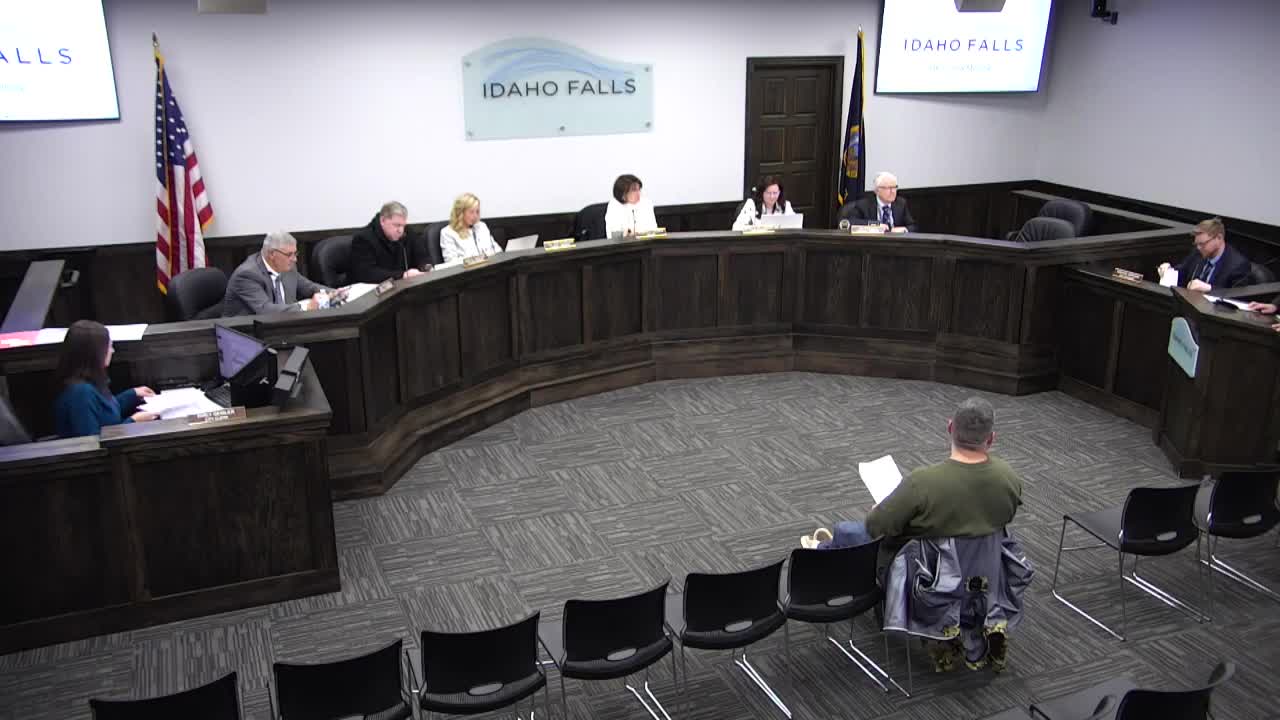
Idaho Falls council adopts three code changes reclassifying certain offenses and defining disorderly conduct

2522199 · March 6, 2025

Loading...

AI-Generated Content: All content on this page was generated by AI to highlight key points from the meeting. For complete details and context, we recommend watching the full video. so we can fix them.

Summary

The Idaho Falls City Council on Thursday approved three ordinances that redefine and reclassify portions of the city code: a new disorderly conduct definition, reclassification of some animal-control violations from misdemeanors to infractions, and repeal of a city abatement provision for graffiti.

The Idaho Falls City Council approved three ordinances Thursday evening that update local enforcement tools: a new disorderly conduct ordinance, a change reclassifying some animal-control violations from misdemeanors to infractions, and repeal of a city abatement provision for graffiti.

The measures, presented by Police Chief Bryce Johnson, do not create new prohibited behaviors, Johnson said; rather, they clarify definitions and adjust penalties in city code. Council members voted to suspend the usual three-readings rule and approved each ordinance by roll call.

Under the disorderly conduct ordinance the council approved, the city will define and prohibit behavior such as fighting, threatening, taunting and other conduct that disturbs the peace, and expressly prohibit blocking sidewalks or interfering with airport operations. The ordinance also provides for enhanced penalties when the conduct occurs while a person is intoxicated; in those cases the penalty escalates under the draft language presented by the police chief.

A separate ordinance moves some existing animal-control and dog-control violations from a misdemeanor to an infraction for a first offense, with subsequent violations within a calendar year escalating to misdemeanor treatment. Chief Johnson described the change as a step to promote compliance before criminal prosecution is used.

The third ordinance repeals the city’s abatement provision for graffiti on private property and reclassifies graffiti offenses so the first two offenses in a calendar year are infractions, with escalation after that. The council and staff said private property owners will again be responsible for removing graffiti from their property; the city will no longer automatically abate private-property graffiti.

Council members asked if the disorderly conduct definition would affect lawful protests that occupy sidewalks. Chief Johnson and councilors clarified that the new language prohibits blocking free passage on sidewalks — not mere crowding — and that the department typically coordinates with protest organizers to avoid blocking movement. Council members also discussed why graffiti reclassification escalates only on the third offense, while the animal-control language escalates on the second offense; staff said the differences reflect how violations typically occur in each area and the city’s desire to focus on compliance first.

All three ordinances were approved unanimously on final votes. The council directed publication of summaries and codification in city code as provided in each ordinance.

The ordinances were presented in a regular agenda item by Chief Bryce Johnson and were the subject of a work session earlier in the week, according to the council president.