Get Full Government Meeting Transcripts, Videos, & Alerts Forever!
Get email alerts on the Public Safety Loitering topic
No spam. Unsubscribe anytime.
County advances substitute to broaden loitering ordinance to cover service stations, motels, convenience stores and monitored businesses
Summary
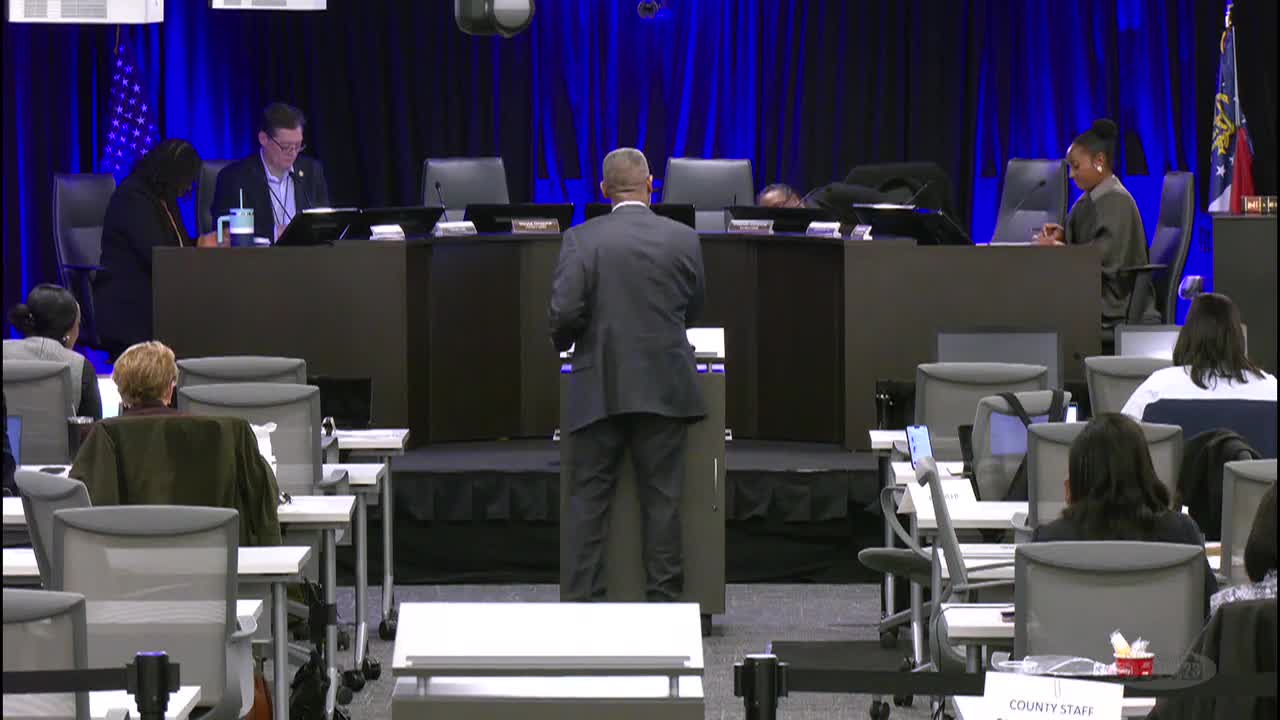
DeKalb County—s IRPS committee took up a walk-on substitute amending Code Section 16-43 (loitering) to expand locations where loitering is prohibited, and the committee approved a substitute to be presented Tuesday after law-department review.
DeKalb County—s IRPS committee took up a walk-on substitute amending Code Section 16-43 (loitering) to expand locations where loitering is prohibited, and the committee approved a substitute to be presented Tuesday after law-department review of several requested changes.
A police-department representative read the existing loitering provision and said the proposed amendment would add automobile service stations, motels and extended-stay hotels, convenience stores and "monitored businesses" (as defined in the county—s video-surveillance ordinance) to the list of locations where loitering is unlawful. Staff said the change is intended to give business owners an easier enforcement path and to help law enforcement address activity that can lead to drug use and violence.
Commissioners and staff discussed expanding the language to cover highway on- and off-ramps and asked the law department to evaluate whether the ordinance should also refer more broadly to commercially or industrially zoned properties rather than listing individual business types. Attorney Phillips confirmed that enforcement begins with officer engagement and the person questioned must be given an opportunity to state a legitimate reason for being present; staff said exceptions for legitimate activities (for example, fundraising by school groups) would be handled through officer discretion.
Staff described an enforcement strategy that includes working with the business-license office and police to ensure retail owners post no-loitering signs that correspond to the ordinance language. Posting signage, staff said, helps avoid putting business owners in the position of repeatedly calling law enforcement and makes it easier for officers to identify violations during patrols.
After discussion, staff said they would work with the law department to address commissioners— questions and prepare a substitute ordinance for Tuesday—s meeting. The committee then voted to approve the substitute contingent on the law department—s revisions; the motion passed with all members voting in favor.
No changes to criminal penalties or enforcement procedures beyond the listed location expansions were approved at the meeting; staff will circulate the revised substitute for committee review before Tuesday—s full consideration.