Get Full Government Meeting Transcripts, Videos, & Alerts Forever!
Get email alerts on the Affordable Housing topic
No spam. Unsubscribe anytime.
Duluth committee recommends $8.8 million for affordable housing, outlines CDBG/ESG funding priorities for 2025 action plan
Summary
The Community Development Committee presented the City of Duluth's HUD-required consolidated plan for 2025'29 and recommended funding priorities including $8,825,000 for affordable housing, $352,000 for public services, $207,000 in Emergency Solutions Grant funds and various HOME, public facilities and administration allocations.
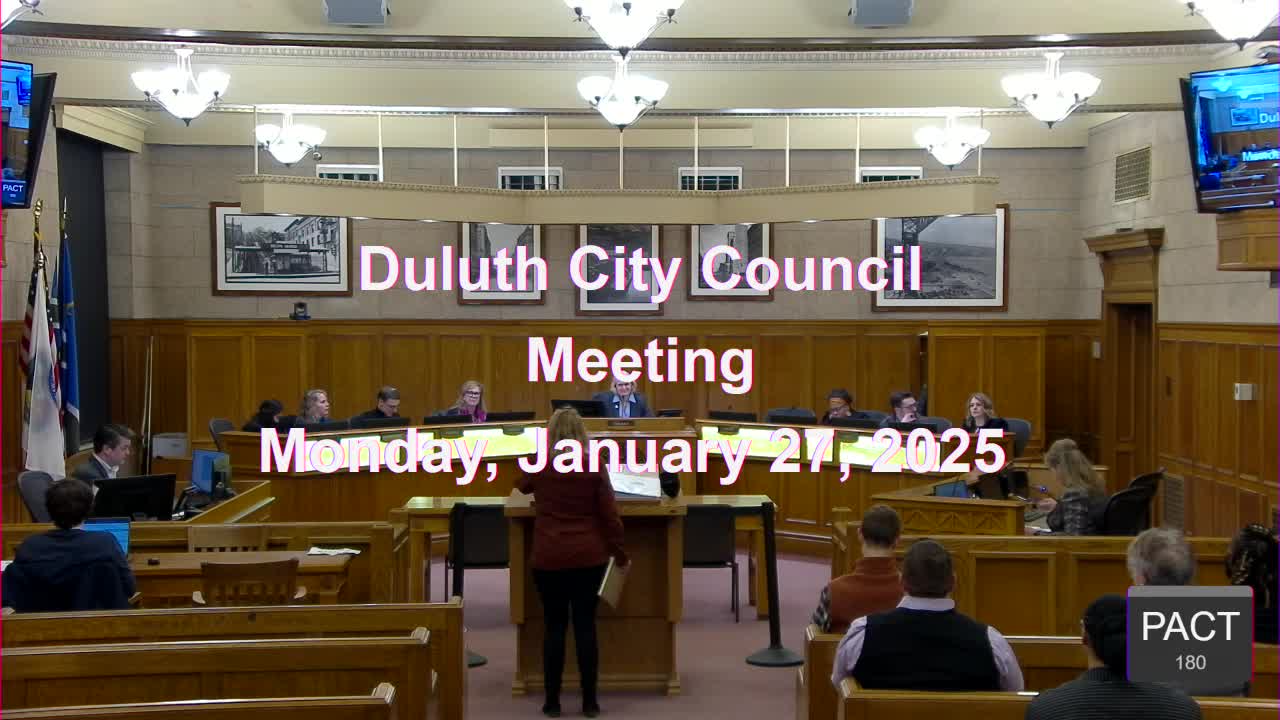
Suzanne Kelly, senior planner with the Planning and Economic Development Division, told the council that the Community Development Committee presented the consolidated plan covering 2025 through 2029 and the action-plan funding recommendations the council will consider tonight.
The committee recommended $8,825,000 to affordable housing programs, including housing rehabilitation and community land trust work intended to support about 95 units; $352,000 for public services (subject to HUD's 15% cap on public-service use of CDBG funds); $207,000 in ESG (Emergency Solutions Grant) funds for homelessness prevention and rapid rehousing; $330,520 for public facilities projects; $470,000 for administration; and a recommended $373,480 for economic development programs from approximately $613,000 requested.
Why it matters: the consolidated plan is a HUD-required five-year strategy that guides federal CDBG, ESG and HOME funding. The city must document public outreach and spell out priorities; these funding recommendations will determine which local organizations receive federal grant support in coming years.
The committee described a multi-pronged public outreach process. Kelly said staff conducted a three-week online community needs survey that received 231 responses; staff also staffed tables at community events, held a public-input session June 25, interviewed 12 agencies with a five-question survey, and hosted a meeting with African-led organizations to gather specific needs. The public comment period produced 14 written comments and 12 speakers at a November 19 hearing, the committee said.
"This document is incredibly prescriptive, and contains a lot of bureaucratic language," Kelly said of the consolidated-plan material, and she encouraged councilors to at least read the executive summary.
Steve Wick, chair of the Community Development Committee, described the committee's volunteer review process. Committee members reviewed applications in a binder provided to councilors and said recommendations resulted from months of discussion and prioritization given limited federal funds.
David Lewis, a committee member presenting the affordable-housing section, said the recommended housing allocation is the largest portion of the plan and is intended to support housing rehabilitation and new construction. "We hope to provide assistance to create 95 more units or help 95 units with CDBG funding," Lewis said.
Presenters highlighted several specific program categories: - Public services: recommended $352,000; Kelly noted HUD caps public-service spending at 15% of the CDBG allocation and described eligible activities, from employment services to fair-housing counseling. - ESG (Emergency Solutions Grant): recommended $207,000 to help people regain housing stability after a housing crisis. - HOME program and contingency: presenters said the HOME category includes a $100,000 allocation for tenant-based rental assistance and $350,000 targeted for building new units; final HUD grant amounts will not be finalized until spring, so the committee adopted a contingency rule: if the final HUD award varies by less than 3% staff, with committee direction, may reallocate funds; changes greater than 3% would require a public hearing. - Economic development: the committee recommended $373,480 for workforce, training and small-business support programs (from about $613,000 requested). - Public facilities and administration: $330,520 for facility upgrades and equipment and $470,000 to support staff administering HUD-funded programs.
Pat Brownell Sterner and Jasmine Clark presented the public-facilities and administration recommendations and said the proposed facility projects would collectively serve an estimated 75,000 individuals.
Committee members and staff emphasized two cross-cutting needs heard in outreach: more community gathering spaces and increased mental-health supports. The plan lists affordable housing, neighborhood revitalization, income supports, living-wage job creation, homelessness services, health services, food access and childcare as primary funding goals over the five-year period.
Councilors asked clarifying questions after the presentation about application placement in the packet, why some applicants were not funded and how the committee set percentage targets by category. Kelly and Wick said the committee used survey results and committee targets to guide allocations and that one nonprofit, Justice North, submitted an application the committee judged incomplete and did not fund after the applicant did not respond to follow-up questions.
Next steps: presenters said final funding depends on HUD's spring award notice; staff recommended council consider the action-plan allocations as presented and noted the city will open a public hearing if the final HUD award differs by more than 3% from the estimate.