Get Full Government Meeting Transcripts, Videos, & Alerts Forever!
Get email alerts on the Land Use Highland Bridge Variances topic
No spam. Unsubscribe anytime.
Council sustains BZA on Highland Bridge variances after tied votes deny appeals
Summary
The St. Paul City Council failed to overturn Board of Zoning Appeals denials of several variances requested by Ryan Companies for Highland Bridge Block 2B and 2C; motions to grant the appeals tied 3-3 and failed, leaving the BZA denials in place.
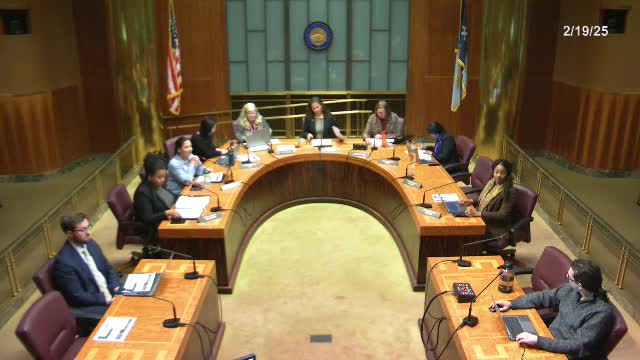
The St. Paul City Council on Feb. 19 considered appeals by Ryan Companies challenging Board of Zoning Appeals (BZA) denials of variances for mixed-use development at Highland Bridge Block 2B and Block 2C. After extended debate and roll-call votes, motions to grant the appeals ended in 3-3 ties and failed, leaving the BZA decisions intact.
The BZA had met three times on the applications and denied variances related to floor-area ratio and building height for certain parcels, finding that required legal findings (including consistency with the 2040 Comprehensive Plan and a showing of practical difficulties) were not met. City planning staff and the Highland District Council had recommended approval; the city council’s role on appeal was limited to determining whether the BZA erred in fact or procedure under City Code section 61.702.
Council Member Jost, who supported granting the appeals, urged the council to focus on the legal record rather than personal preference: “the question before us is not a preference of this project, but of law,” she said, describing technical site constraints cited by the applicant — including lot shape, pedestrian easements, shallow bedrock, perched water and sloping grades — as practical difficulties that supported the requested relief. Jost noted the staff report’s findings that many of the denied variances met the six required findings for variances and argued the BZA’s written resolution had factual errors.
Council Member Yang, who opposed granting the appeals, disputed that the record showed an error by the BZA and said the BZA properly weighed competing testimony: “I did not find an error in the decision making and the reasoning of the Board of Zoning Appeals.” Yang and other opponents pointed to public testimony that the physical constraints cited by the applicant are routine design challenges and emphasized the BZA’s authority to weigh that testimony when assessing practical difficulty and consistency with the Comprehensive Plan.
Motions and votes: For ABZA 25-1 (Block 2B) Council Member Jost moved to grant the appeal. The roll call was Johnson — yes; Jost — yes; Kim — no; Yang — no; Buie — yes; Council President Naker — no. The vote was 3 in favor, 3 opposed; the motion failed on a tie and the appeal was denied. For ABZA 25-2 (Block 2C) Jost again moved to grant the appeal; the council vote was the same 3-3 tie and the motion failed, and the appeal was denied.
Council discussion referenced the 2017 Ford site master plan and subsequent amendments (2019, 2020), the city’s 2040 Comprehensive Plan policies, and the BZA record from hearings on Dec. 9, Jan. 6 and Jan. 21. Several council members said they were bound to evaluate whether the BZA’s fact-finding or procedure contained errors rather than substitute their own policy preferences.
What happens next: Because the council tied and did not grant the appeals, the BZA denials remain in effect for the variances in question. The record notes a statutory or administrative deadline referenced during the meeting (March 17) for action in related proceedings; parties may pursue whatever appeals or options remain under applicable code or law.