Get Full Government Meeting Transcripts, Videos, & Alerts Forever!
Get email alerts on the Illegal Dumping topic
No spam. Unsubscribe anytime.
Committee approves misdemeanor for large or repeated illegal dumping
Summary
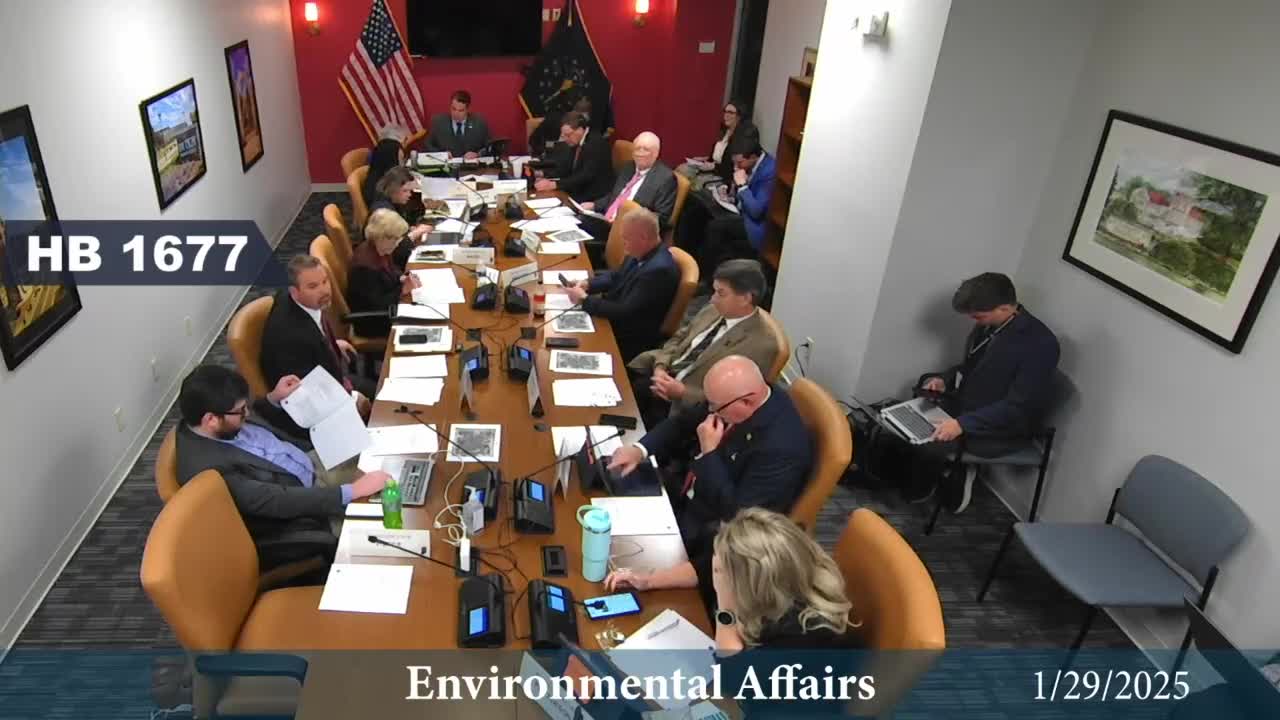
House Bill 1677, creating a class C misdemeanor for large or repeated illegal dumping (30 square feet or more), passed the House Environmental Affairs Committee unanimously 13-0 in committee. Sponsor and supporters said the measure provides law enforcement an additional tool and allows restitution options for victims.
The House Environmental Affairs Committee voted to pass House Bill 1677, which would create a class C misdemeanor for individuals who illegally dump a large quantity of waste (defined in the amendment as 30 square feet or more) or who repeatedly dump waste on private property. The committee adopted amendment number 3 to clarify that landowners who store items on their own property would not be improperly criminalized; the amended bill passed the committee 13-0.
Rep. John Gore, the bill sponsor, said the measure is aimed at a rising problem of illegal dumping across urban and rural communities and intends to give local law enforcement an option beyond civil code enforcement. "This bill establishes that dumping a large quantity of trash or contaminants ... constitutes a class C misdemeanor," Gore said, noting the statute also enables restitution as part of criminal process so victims can seek compensation.
Gore and committee members said the amended language was designed to protect farmers and other landowners who store personal equipment (for example, tires beside a barn) from inadvertently falling under the new misdemeanor. The sponsor said the misdemeanor is the lowest criminal classification in state code and would be available to jurisdictions that choose to use law enforcement rather than civil code enforcement.
No witnesses registered in opposition or in support; the committee moved the amended bill forward with bipartisan support and no recorded negative votes. The bill record shows the committee agreed the misdemeanor should allow for law enforcement involvement and restitution options while preserving local discretion on enforcement priorities.
The measure will next move forward in the House legislative process.