Get Full Government Meeting Transcripts, Videos, & Alerts Forever!
Mayor Wilson outlines rapid-exit shelter push, reunification goals and cites federal executive order
Summary
Mayor Wilson presented a multi-pronged plan to expand emergency shelter capacity, speed exits to housing, and scale reunification efforts; the city attorney summarized a recent federal executive order that could reorient discretionary grant priorities toward required treatment-based programs.
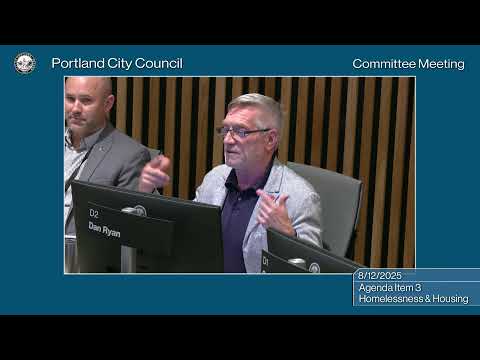
Mayor Wilson told the Homelessness and Housing Committee on Aug. 12 that the city is pursuing a multi-part strategy to reduce unsheltered homelessness by expanding low-barrier shelter capacity, increasing reunifications with family or prior communities, and reestablishing community safety and sanitation standards.
"Homelessness is a housing problem. Full stop," Mayor Wilson said, outlining what he described as six goals that include opening more emergency shelter beds, creating rapid-exit pathways into housing, and increasing outreach and enforcement where safe shelter is available.
Wilson said the city had opened or sponsored six shelters representing 630 beds and reported 31,280 nights of safe, secure sleep provided as of Aug. 3. He described utilization rates over recent months of about 73% for "safes" and 84% for the Moore Street facility and said the city is aiming to have 1,500 new emergency shelter beds by Dec. 1, while Multnomah County has a separate commitment of 1,000 beds by Dec. 31.
The mayor framed reunification — helping people return to live with family or previous communities — as an immediate relief strategy. "Reunification is housing," he said, and set a goal of meeting or exceeding 14 reunifications per week. He cited the city's most recent point-in-time count, saying 26% of respondents who answered where they were last housed reported coming from out of state.
Wilson described operational changes intended to reduce bottlenecks in shelter flow, including clearing minor legal barriers (for example, misdemeanors or warrants) "within hours instead of weeks," and…
Already have an account? Log in
Subscribe to keep reading
Unlock the rest of this article — and every article on Citizen Portal.
- Unlimited articles
- AI-powered breakdowns of topics, speakers, decisions, and budgets
- Instant alerts when your location has a new meeting
- Follow topics and more locations
- 1,000 AI Insights / month, plus AI Chat