Get Full Government Meeting Transcripts, Videos, & Alerts Forever!
Get email alerts on the Special Assessment Fire topic
No spam. Unsubscribe anytime.
Commission sets preliminary fire-assessment rates, schedules public hearing
Summary
The commission adopted a preliminary resolution increasing the maximum fire services special-assessment rates, a motion that sets the maximum allowing up to the staff‑recommended increase; commissioners voted unanimously to set the preliminary rates and a September public hearing was scheduled.
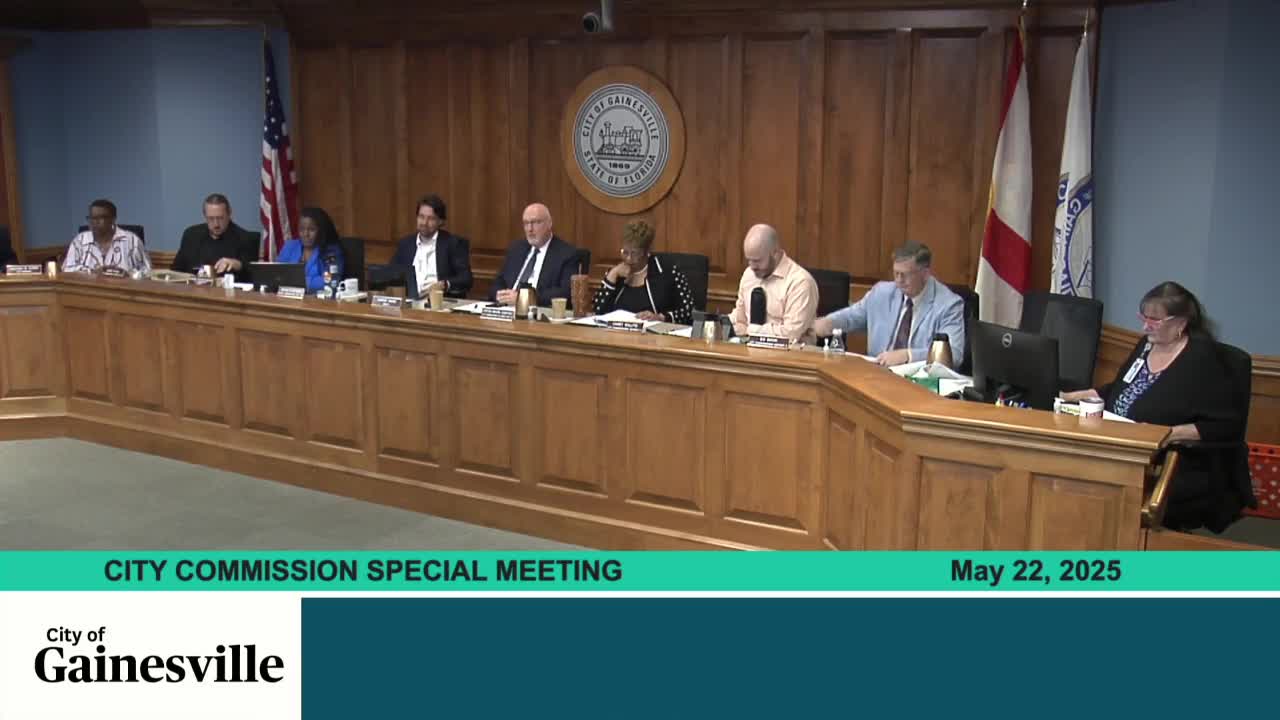
The Angel City Commission on May 22 adopted a preliminary rate resolution for the city’s fire‑services special assessment and set a public hearing for September, after staff recommended increasing the assessment to recoup more of the non‑EMS portions of fire costs.
City staff told the commission the proposed preliminary rates reflect an increase that could recover up to 53 percent of eligible fire-service costs; staff said that level would generate roughly $317,000 in additional revenue to offset general‑fund expenditures for non‑EMS fire services. Sandy Newbarth, a consultant with GSG, explained sample impacts: a 15,000‑square‑foot apartment complex would pay about $1,305 under the current rate and about $1,338 after the proposed adjustment; a single‑family 2,500‑square‑foot house would increase by approximately $5.50 to $2.25.
Interim Fire Chief Sean Hill House reminded the board that the fire assessment can be used only for non‑EMS portions of the fire budget and that the city updated the assessment methodology in 2023. Hill House characterized the preliminary resolution as a procedural step that establishes a maximum rate; the commission can lower the rate prior to final adoption.
Commissioner Mullins moved to postpone and return to the FY2023 methodology; that motion did not receive a second. Several commissioners asked for more examples showing how different property types (single‑family, multifamily, commercial, institutional) would be affected; staff agreed to provide additional calculator examples and to include detailed comparisons at second reading.
The commission then approved a motion to set the preliminary rate resolution at the proposed maximum (the May 22 presentation framed this as up to a 53 percent increase) and to set the annual‑rate public hearing for 5:30 p.m. in September. The city clerk called a roll and the vote passed unanimously.
Staff and commissioners also discussed exemptions. Staff said government properties are exempt from placement on the tax roll, charitable and religious properties may qualify for an exemption (about $539,220 in exemptions was cited for the current year) and a small hardship exemption program (about $9,000) exists. Staff noted exempting additional property types would have direct general‑fund cost implications unless the council funds the exemption from another source.
Next steps: staff will publish required notices, provide commissioners with example calculations for representative property sizes and types, and return for second reading with a final rate resolution and the September public‑hearing record.