Get Full Government Meeting Transcripts, Videos, & Alerts Forever!
Get email alerts on the Municipal Budget topic
No spam. Unsubscribe anytime.
Commission reviews FY2026 budget drafts for fire, police, parks and public works
Summary
City staff presented department budget proposals for fiscal year 2026, highlighting personnel costs for fire and police, planned capital and maintenance projects in public works, and contract and event costs in parks, while city managers said the updated estimates widen the projected general-fund gap.
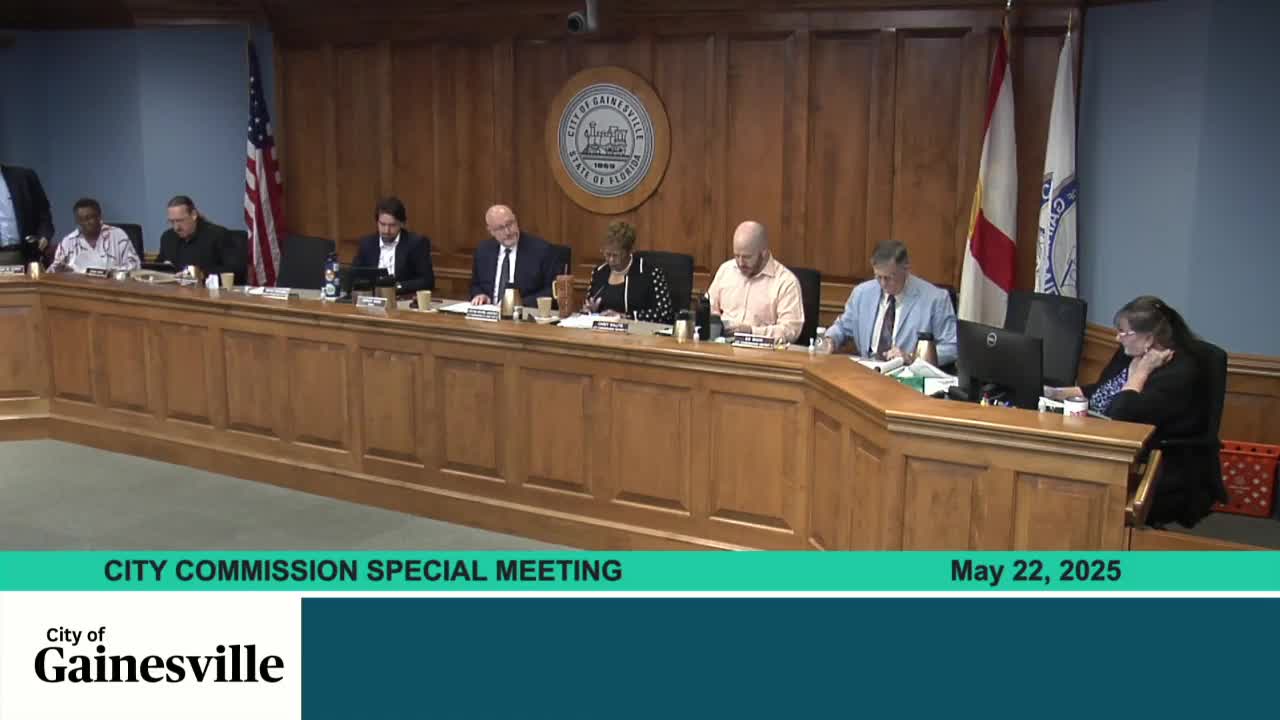
The Angel City Commission on May 22 heard department-level presentations on the fiscal year 2026 draft budget that show rising personnel and operating costs and an increased preliminary general-fund gap.
City Chief of Staff Cynthia Ramos reviewed the workshop agenda and said staff would present budget details for police, fire, parks, recreation and cultural affairs, and public works and hold the first public hearing on the fire assessment. Ramos said the city’s current consolidated estimate for the departments presented is roughly $7.3 million, or about 6 percent, higher than last year’s adopted budget and that staff will return June 12 with additional departments and preliminary taxable-value numbers.
The presentations outlined the drivers behind the increases. Interim Fire Chief Sean Hill House said Gainesville Fire Rescue’s proposed FY2026 general-fund budget is $29.4 million, about $1.6 million above FY2025 adopted, driven primarily by overtime (+$825,000), merit and salary increases (+$547,000) and higher fleet costs. Hill House described operational priorities including continued staffing stabilization after a change to a 24/72 schedule, promotions and training, risk‑reduction work, community outreach programs and plans for new stations and facility replacements.
Police Chief Moya said the police department’s FY2026 proposed budget is about $4.3 million higher than FY2025 adopted, led largely by reinstating 20 officer positions that were frozen last year (about $1.7 million), merit and personnel increases ($728,000) and overtime ($720,000). The proposal also includes increases for fleet services, a taser contract, and higher body‑worn camera costs. Chief Moya reported staffing vacancies had improved from prior years and said 30-plus candidates are in process with multiple training academies planned through the next fiscal year; a newly funded cohort is expected to materially reduce vacancies by January.
Roxy Gonzalez, director of Parks, Recreation and Cultural Affairs, said PRCA’s general-fund request increases 4.1 percent (about $485,000), largely for personnel and rising contractual costs for pools and grounds maintenance. Cultural events such as the downtown festival and Hogtown Medieval Fair drew tens of thousands of visitors in the last year, Gonzalez said, and the proposed budget preserves funding for those events and for increased parks and trails maintenance.
Public Works Director Gail Mowery outlined operations for roads, stormwater, solid waste and facilities and described more than 50 projects in design or construction. Major public-works items in the next fiscal year include roadway resurfacing and lane repurposing for bike lanes on multiple corridors, the Tumbling Creek CDBG-funded drainage project, Cedar Grove stormwater remediation (with grant applications planned), design and construction of a new Fire Station 3, the GPD evidence/property reconstruction, and preliminary work on a Southwest Public Safety Center. Mowery said the department plans to implement new asset-management software to add an equity component to project prioritization and to support five-year pavement and stormwater planning.
Finance staff and the city manager said the updated departmental estimates increase the preliminary general‑fund gap staff presented March 27 (previously about $5.3 million). With the changes shown May 22, staff estimated the gap is roughly $8.5 million to $9.0 million, with final numbers to be refined once taxable-value and state revenue-sharing figures are available. Manager Cynthia Ramos said staff will return on June 12 with a comprehensive general‑fund overview and proposals for balancing options. She also noted an available excess fund balance (approximately $18 million) and said staff will present recommendations to the finance committee about using one‑time fund balance for capital or other one‑time needs while reserving the remainder for budget balance decisions.
Commissioners asked for additional detail on several items: examples of how the fire-assessment increase would change typical bills, the timing and staffing implications of red-light camera enforcement, clarification about who is charged or exempt under the fire assessment, and more detail on capital outlay increases shown in the PRCA slides. Staff said more granular examples would be provided at second readings and in follow-up materials.
Commissioners also heard actuarial information showing an increase in required pension contributions for police and fire retirement plans tied to market fluctuations; the actuarial representative said the increase could raise required contributions by roughly 380 basis points (about $1.1 million to $1.6 million depending on covered payroll) in FY2026.
Less formal items raised during the meeting included cemetery operations at Evergreen Municipal Cemetery (staff said interments data and disinterment counts would be provided on request); tree‑mitigation staffing additions to expand tree planting and establishment; and communications‑studio equipment and cost estimates for in‑house production (staff provided an estimated one‑time outfitting cost of about $61,900 and noted the city currently pays $1,300 per month to rent a studio). Staff said further detail and follow-up materials would be returned to commissioners in coming weeks.
Staff emphasized that the May 22 workshop did not set final policy or rates; it was a step in the multi‑meeting budget process with formal hearings and adoption still to come.