Get Full Government Meeting Transcripts, Videos, & Alerts Forever!
Get email alerts on the Interlocal Agreement topic
No spam. Unsubscribe anytime.
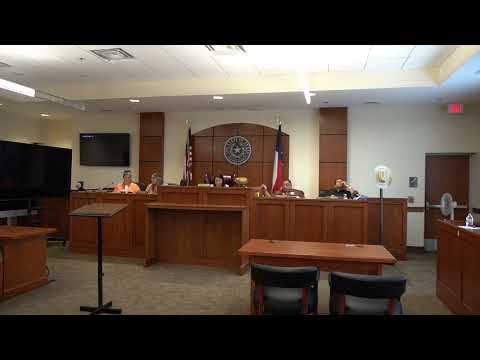
Dimmit County commissioners table interlocal cooperation agreement with Carrizo Springs after disputes over brush pickup and burn site
Summary
Commissioners raised concerns about changes the city made to a proposed interlocal cooperation agreement, including reducing brush pickup from six to four times a year and language about a joint burn site; the court directed further negotiations and asked staff to pursue a mutual-aid alternative if talks fail.
Dimmit County Commissioners Court on an agenda item about an interlocal cooperation agreement with the city of Carrizo Springs deferred action after commissioners said the city changed terms the two bodies had agreed to at a joint meeting.
The court discussed differences between the draft agreement and the terms approved at a prior joint meeting, with commissioners saying the city’s version cut brush pickup from six times a year to four and added language about working jointly on a burn site. County officials said the city’s council approved a revised agreement that was inconsistent with what was negotiated at the joint meeting.
Judge (name not specified in transcript), who led the discussion, and several commissioners described contacting city staffer “Miss Garcia” about the changes. Commissioners said one city council member later told Garcia she had not heard the provision stated at the joint meeting, and the city then approved the different language. Commissioners expressed frustration that the city attorney apparently finalized the document before sending it back to the county.
Commissioners raised several substantive concerns: whether county equipment or personnel would be used for city brush burning, the county’s exposure to tipping fees and other charges for brush delivered by county crews, and public-safety and training concerns about conducting controlled burns on county property. One commissioner said she would not commit county fire trucks or firefighters to a burn site when the county had not trained those personnel for controlled burns.
Several commissioners urged prioritizing a mutual-aid agreement as a fallback. They described an interlocal cooperation agreement as broader—covering regular services such as brush pickup and equipment use—while a mutual-aid agreement would be limited to assistance during declared disasters and emergencies. The county’s emergency management coordinator noted that without an approved mutual-aid or interlocal agreement, county crews risk running afoul of Texas Department of Emergency Management procedures when responding to disasters.
After extended discussion, the court voted to table the interlocal cooperation agreement and directed the judge and staff to request another joint meeting with Carrizo Springs to renegotiate the terms. The judge said she would contact Miss Garcia to attempt to set a new date for a joint meeting; if talks failed, she said the county would pursue a mutual-aid agreement to enable emergency assistance in disasters.
The court recorded the tabling motion as passed by voice vote. No binding interlocal agreement was approved at this meeting.
The disagreement touched on issues of cost allocation (who pays tipping fees when county crews haul city brush), frequency of scheduled brush pickup (county representatives said their prior agreement called for six pick-ups per year, the city’s approved version showed four), and whether the county should allow controlled burning at its landfill property. Commissioners said they will continue to press for terms matching what they believed had been negotiated at the earlier joint meeting and to seek clarification from Carrizo Springs’ counsel.