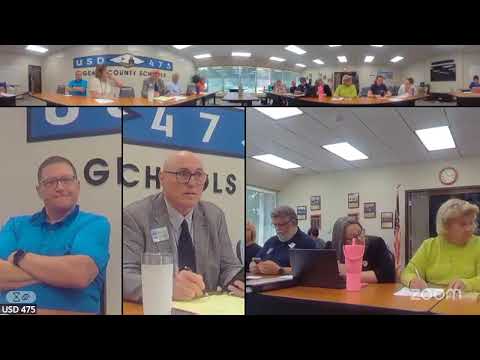
Geary County negotiators and teachers deadlock over Karnes alternative-school planning time; agree to committee and further talks
Loading...
Summary
Geary County Schools negotiators and teachers’ representatives debated a proposed change to planning time and class periods for the Karnes alternative school during a bargaining session that produced no formal agreement but ended with both sides agreeing to continue talks and form a joint committee.
Geary County Schools negotiators and teachers’ representatives debated a proposed change to planning time and class periods for the Karnes alternative school during a bargaining session that produced no formal agreement but ended with both sides agreeing to continue talks and form a joint committee.
The discussions centered on a district proposal to move the Karnes Building to a 60‑minute class schedule and on a related union request to guarantee a minimum of 60 minutes of daily planning for alternative‑school teachers, with the union proposing a one‑year trial (a sunset) to evaluate the change. District negotiators opposed cutting planning time across broader grade levels and offered instead to leave the current schedule in place while forming a committee of Karnes teachers and administrators to identify data to collect and metrics for evaluating any schedule change.
Why it matters: the dispute touches on instructional minutes for a vulnerable student population served at the alternative school, teacher preparation time, and class size and course offerings at Karnes. Teachers argued that shorter planning windows would reduce time for preparation and collaboration, potentially harming instruction. District staff said the 60‑minute proposal could enable more face‑to‑face time with certified teachers and smaller class sizes for students who have struggled in longer block periods, but they emphasized the need to preserve students’ time with their primary educators and to follow consistent scheduling practices across the district.
Key points from the session:
- Scope of proposal: The union asked that Karnes teachers have no less than 60 minutes of planning time per day and that a schedule change to 60‑minute class periods be tried for one year with a sunset clause for evaluation. The district described how a 60‑minute period would be implemented operationally at Karnes, noting split periods and the need to reallocate 20 minutes of planning time elsewhere in the day to preserve total planning minutes for current teachers.
- Data and evaluation: Teachers sought a thorough evaluation plan, including metrics such as additional instructional minutes with qualified teachers, graduation rates, and how much preparation (“prep”) alternative teachers would need under the new schedule. The district and teacher representatives agreed to form a committee of Karnes teachers and administrators to define which data would be collected and how success would be measured, with a suggested review after a semester or a year.
- Operational impacts: District staff outlined scheduling impacts: under a 60‑minute class model, two periods in the day would need to be divided into shorter intervals so existing planning time totals could be preserved. Administrators warned that splitting plan time must follow the negotiated agreement and be consistent across weeks; they proposed an administrative plan to build split planning into the schedule so it would be predictable for staff and students.
- Class offerings and staffing: District negotiators said the proposed schedule could reduce the number of sections available for students in certain periods, potentially limiting course offerings. They also said smaller class sizes at Karnes are important for the student population served and that the schedule change might permit more live classes and better staffing configurations.
- Compromise and next steps: The district proposed keeping the current Karnes schedule “status quo” while establishing the teacher–administrator committee to study data and return with recommendations. Both sides agreed to pause immediate adoption of schedule changes and to return to bargaining in July with potential counterproposals and additional information. No motions or votes were taken during this session.
Meeting context and process notes: The parties discussed a memorandum of understanding and previous bargaining articles (referred to in the session as Article 3, Article 4, and other article numbers) that reference planning time, professional day definitions, and alternative‑school language. Teachers emphasized inclusion in site visits and decision‑making for any schedule pilot; district staff emphasized statewide comparators for planning‑time averages and the operational difficulty of reallocating student contact time. The parties acknowledged differences in how planning time is used across staff members and committed to data collection and a collaborative review before changing district practice.
The session concluded with agreement to pause immediate action, to schedule another bargaining meeting in July, and to bring counters or proposals at that time for further negotiation and committee formation.