Get Full Government Meeting Transcripts, Videos, & Alerts Forever!
Get email alerts on the Seawall Permitting topic
No spam. Unsubscribe anytime.
Miami-Dade Commission approves amended ordinance to speed seawall permits, retains limits and review
Summary
The Miami-Dade County Commission voted to approve an amended ordinance (item 1 G 1) intended to shorten permitting timelines for seawalls and to allow new "living seawall" products, while adding size limits, reporting requirements and a phased effective date tied to new permitting software or Jan. 1, 2026.
The Miami-Dade County Commission on an amended vote approved item 1 G 1, a change to the county's seawall and bulkhead permitting rules that establishes a 90-day review target for short-form applications, allows certain living seawall products, and sets limits on how far new structural piles and reconstructed faces may extend waterward.
The ordinance matters because Miami-Dade's shoreline is largely privately owned and commissioners, industry and environmental groups said long permitting delays leave homes and infrastructure exposed to storm damage and raise costs for property owners. At the same time, speakers raised concerns the changes could affect habitat in the Biscayne Bay Aquatic Preserve and narrow residential canals.
Commissioner Eileen Higgins, sponsor of the item, told the commission the ordinance "recognizes that there's lots of new innovations going on, particularly in living seawalls, which are still concrete." Higgins said the amendments would bring the county's riprap standards into alignment with state and local planning standards, create flexibility for newer products, and institute a 90-day "shot clock" with reporting when the department misses the target.
Public comment before the vote included industry representatives and environmental advocates. Bree Kokus, senior marine biologist at Ocean Consulting, said she supports the riprap restriction and the item generally and described biological changes she has observed in Biscayne Bay: "I speak confidently that no 1 knows current over urban coastal habitat within Biscayne Bay better than me, not 1 person." Representatives of Friends of Biscayne Bay and Miami Waterkeeper urged additional safeguards; Maria, speaking for Miami Waterkeeper, asked commissioners to consult the Department of Environmental Protection about potential conflicts with protections for the Biscayne Bay Aquatic Preserve and voiced concern about allowing primary structural piles that extend up to 14 inches to be eligible for short-form permits.
Industry speakers, including Kirk Lofgren of Ocean Consulting and Glenn Larson of Dock and Marine Construction, said lengthy permit timelines — sometimes many months or more — have stalled projects and that the proposed changes and new technologies could speed repairs and provide environmental benefits. Alex Fernandez, Miami Beach city commissioner, said Miami Beach has about 55 miles of seawalls and that delays in county permitting "leave our residents and infrastructure exposed during a climate emergency." Fernandez noted Miami Beach has adopted higher seawall standards and urged faster permitting to increase resilience.
The final package of amendments moved by Commissioner Higgins and seconded by Commissioner Hardiman included: (1) deletion of language eliminating public hearings in certain recital clauses; (2) additions clarifying federal and state permitting authorities where applicable; (3) a short-form permit eligibility rule allowing replacement/repair where primary support piles extend no more than 14 inches waterward provided the rebuilt face is no more than 18 inches waterward of the existing primary support piles; (4) a provision that a Board of County Commissioners public hearing must be held on a short-form application (not limited to seawalls/bulkheads) upon written request; and (5) a delayed effective date tying the new permitting timeline to the full implementation of the Gold Key software system for class 1 permits or to 01/01/2026, whichever is earlier.
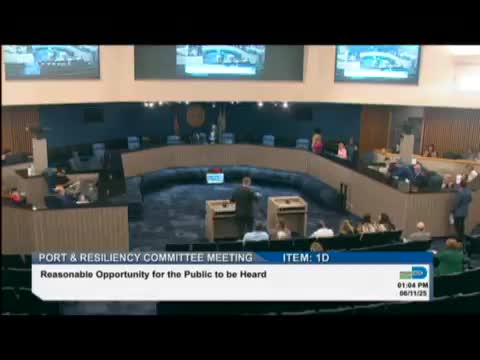
Commissioner Higgins moved the ordinance as amended; Commissioner Hardiman seconded. With three commissioners present at the vote the motion passed as amended.
The ordinance includes reporting requirements: when Durham (the county department responsible for environmental permitting) exceeds the 90-day timeline it must disclose that delay to the commission. The ordinance also preserves the existing public-hearing pathway at the EQCB for items that require or request public hearings.
Implementation details and limits remain relevant to future oversight. Multiple speakers urged the county to consult state agencies about consistency with protections for the Biscayne Bay Aquatic Preserve and cautioned that even small waterward projections can affect habitat, navigation and dissolved-oxygen conditions in residential canals. The commission set the effective implementation trigger to the Gold Key software deployment or Jan. 1, 2026 to allow administrative readiness before the new timelines take effect.
The commission also announced that a separate item (3 E, appointments to the Watershed Board) will be expedited to the June 26 meeting; the ordinance's implementation timeline was clarified during the session. The meeting adjourned after passage of the amended ordinance.