Get Full Government Meeting Transcripts, Videos, & Alerts Forever!
Get email alerts on the Short Term Rentals topic
No spam. Unsubscribe anytime.
Hocking County zoning group outlines proposed short-term rental rules, emergency and enforcement measures
Summary
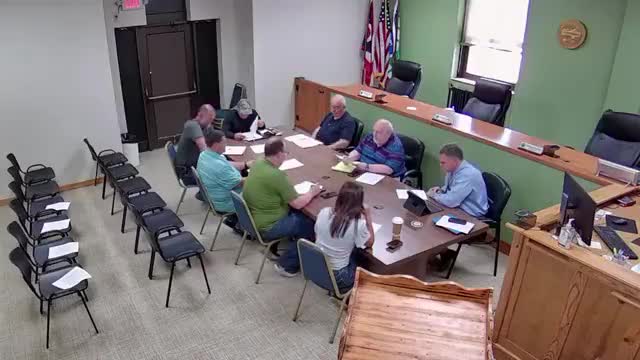
The meeting chair opened the May 29, 2025, Hocking County Zoning Commission meeting with an overview of a year-long public process and said the group is proposing “land use tools” short of full zoning to address growth around the county’s tourism areas.
The meeting chair opened the May 29, 2025, Hocking County Zoning Commission meeting with an overview of a year-long public process and said the group is proposing “land use tools” short of full zoning to address growth around the county’s tourism areas. The chair said a consultant, American Structure Point, helped collect feedback from public meetings and a zoning questionnaire that drew “400 plus responses.”
Why it matters: commissioners and staff said short-term rentals and related safety and nuisance issues are driving rising demands on first responders and county services. The commission discussed rules intended to improve emergency response, clarify enforcement, and capture fair shares of cost increases through impact fees or other mechanisms.
The commission’s discussion focused on a package of measures the chair described as additional land-use tools rather than a full zoning regime. “We’re not proposing zoning per se. We’re proposing, land use tools, additional land use tools that we already have,” the chair said, adding the county prosecutor reviewed proposed concepts for compliance with Ohio planning law.
Key proposals and discussion points included:
- 24-hour local contact and emergency response: The commission said short-term rental permits should require a local 24-hour contact who can respond to calls from first responders and neighbors; members discussed a one-hour response expectation where practical. Commissioners said many cabins lack reliable phone or cell service and that, in some cases, property owners might need to provide a landline or other means of emergency contact.
- Address numbering and on-site wayfinding: Commission members noted problems for 9-1-1 dispatch when private drives and unnamed lanes serve clusters of cabins. The commission discussed requiring street numbers placed in obvious locations tied to the county’s public numbering grid, and signage or placards at private-drive entrances that map numbered cabins back to a public road reference.
- Driveway and turnaround standards for first-responder access: Members proposed application-level review of private driveways serving rentals, with fire or emergency officials able to require pre-construction review and engineering where access appears inadequate. The commission discussed standards for width, grade and turn radius and allowing a local fire chief to require additional work when an access route looks unsafe for emergency vehicles.
- Occupancy, parking and site capacity: Commissioners supported occupancy limits that match a property’s sleeping capacity, contract language that requires renters to acknowledge limits, and parking requirements sized to the advertised capacity so vehicles do not block access for emergency responders.
- Insurance and registration requirements: The commission proposed requiring short-term rental operators to show proof of liability insurance as a condition of permit registration. Members said the county should consult COG/CORSA or other insurance authorities to set minimum coverage levels.
- Building-code and habitability distinctions: The commission noted the State of Ohio has building standards for transient lodging and discussed whether existing state inspections and sign-offs are being applied consistently. Members said the county should confirm how state plan review and inspection apply to converting houses to short-term rentals and to decks and other safety-critical features.
- Noise, nuisance and public-safety controls: Commissioners cited recurring complaints about loud parties, fireworks and on-site shooting ranges that can create safety issues and distress neighbors. They discussed adopting countywide noise and nuisance rules that would apply regardless of property ownership, and noted civil covenants (for example, subdivision restrictions) can also bar certain uses.
- Registry, platform remittance and enforcement: The commission discussed creating a county short-term rental registry and tying registration to remittance of lodging (bed) tax. Members noted that in some Ohio jurisdictions — Cuyahoga, Athens and Cincinnati were cited — platforms collect taxes automatically, but that collection depends on local arrangements and platform agreements. Commissioners also discussed safeguards to prevent third-party operators from collecting tax and failing to remit it to the county.
- Impact fees for public services: The chair asked commissioners to research impact-fee models used elsewhere to recover costs for first responders and infrastructure. Members cited local service volumes as context: “EMS had 4,700 runs last year,” the chair said, and Logan-area fire runs were described as rising from about 900 runs to a projected year with more than 1,000; the chair also said roughly 16% of some runs involved out-of-county residents.
Next steps and coordination: Commissioners repeatedly emphasized working with first responders, emergency management (EMA), 9-1-1 dispatch, the county health department, and the county prosecutor to refine technical standards and enforcement procedures. The chair said the county will not move into closed-door rulemaking and reiterated opportunities for public input.
No regulatory votes were taken at the May 29 meeting. The commission continued the discussion and asked staff to prepare drafts and models for follow-up review; members set a next meeting date in late June.
Ending: The commission adjourned after agreeing to continue work on a draft short-term rental permitting package and to consult first responders, EMA, county legal staff, and tax administration on enforcement, insurance minimums and potential impact-fee structures.