Get Full Government Meeting Transcripts, Videos, & Alerts Forever!
Get email alerts on the Un Security Council topic
No spam. Unsubscribe anytime.
Guyana outlines Security Council program of work, schedules high‑level debate on poverty and conflict
Summary
Guyana, holding the Security Council presidency in June, released a program of work that includes 29 meetings, a June 19 high‑level open debate on poverty and conflict chaired by Guyana’s president, and scheduled renewals of the DRC sanctions and the UNDOF mandate on June 30.
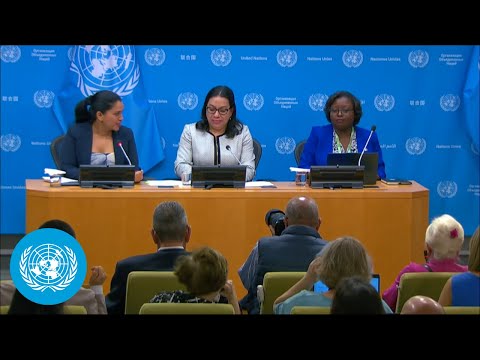
Ambassador Rodrigues Burkett, Guyana’s Permanent Representative to the United Nations, presented the Security Council’s June program of work and said the council adopted the program earlier in the day.
The program lists 29 meetings for June, most mandated country‑specific sessions and several thematic debates. Guyana will hold a signature high‑level open debate on “poverty, development and conflict” on June 19, to be chaired by President Dr. Mohammad Irfan Ali of Guyana with briefers from the United Nations system and the African Union. Ambassador Burkett said, “On the issue of an outcome document for our signature event, yes, we are working on a presidential statement and that's, going to be negotiated of course with our colleagues on the council.”
The agenda includes a June 24 non‑proliferation meeting focused on the Joint Comprehensive Plan of Action (JCPOA), an annual debate on children and armed conflict on June 25 to consider the secretary‑general’s latest report, and expert‑level and region‑focused briefings: an expert briefing on June 5 organized with Denmark and Sierra Leone ahead of the signature event, a Central African region expert meeting on June 6 (co‑organized with Slovenia, the Republic of Korea and Panama), and an informal annual meeting with the European Union Peace and Security Committee on June 3.
Burkett also told reporters the council expects at least two meetings on Ukraine after requests were filed. On a circulated draft resolution concerning Gaza described in questions as put forward by the E‑10, he said the council had no set date for action and that negotiations were ongoing, while expressing support for diplomatic efforts by the United States, Qatar and Egypt and calling for “relief for the people of Gaza as soon as possible.”
Two adoptions are scheduled for June 30: the renewal of Democratic Republic of Congo (DRC) sanctions and the renewal of the United Nations Disengagement Observer Force (UNDOF) mandate. Ambassador Burkett said those renewals are on the program but cautioned the schedule could change given the many issues the council must address. He added that Guyana’s mission will circulate updates to the press corps and that staff expert Stephanie Savory will send email notices of changes.
The presidency emphasized the relationship between development and peacebuilding ahead of the United Nations’ 80th anniversary and highlighted the shortfall on the Sustainable Development Goals ahead of the 2030 target year. Guyana described the June 19 debate as intended to zero in on poverty and underdevelopment “as both drivers and consequences of conflict,” and said the meeting will build on previous Security Council discussions of the security‑development nexus.
Burkett confirmed both Virginia Gamba (the Secretary‑General’s Special Representative for Children and Armed Conflict) and Catherine Russell (UNICEF executive) have been invited and will brief the council on June 25. He also noted that council visits to conflict areas provide important perspective and said Guyana would support arranging more delegations when feasible.
Trishala Persaud, deputy permanent representative and spokesperson for the Guyana mission, opened the briefing and introduced the ambassador. Political coordinator Nishanta Ben was also present for the press briefing.