Get Full Government Meeting Transcripts, Videos, & Alerts Forever!
Get email alerts on the Caregiver Protections topic
No spam. Unsubscribe anytime.
Senate adopts misdemeanor ban on intimate relationships between caregivers and patients in certain care settings
Summary
The Senate approved a second-substitute bill that makes consensual intimate relationships between caregivers and patients in care facilities a misdemeanor-level offense, extending protections beyond licensed professionals to unlicensed staff in long-term-care settings.
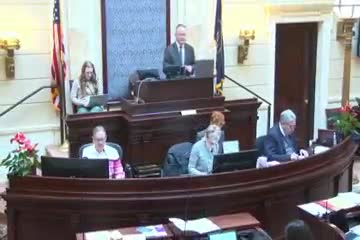
Salt Lake City — The Utah State Senate approved changes to criminal law intended to protect residents of care facilities by making certain intimate relationships between caregivers and patients a misdemeanor-level offense.
Senator Jen Plumb, sponsor of the measure, said the bill grew from concerns raised by the attorney general's office and the victim services commission about power imbalances in extended-care settings and other facilities where unlicensed staff work alongside licensed professionals. "There were individuals who because of power dynamics with their care providers, were being victimized and potentially at risk as patients," Plumb said on the floor when explaining the substitute.
The second substitute adopted on the floor establishes a misdemeanor A prohibition for caregivers who engage in intimate conduct with patients in care settings where the caregiver-to-patient power dynamic makes meaningful consent unlikely, sponsors said. Plumb emphasized the measure is distinct from existing laws addressing sexual assault and nonconsensual conduct: "I need to be clear that this is about consensual. This is not the same as nonconsensual ... There's already laws covering that. This essentially says that if I have a patient, no matter what my caregiver role is, it would never be appropriate for me to have an intimate relationship with them," she said.
The sponsor described the intent as extending expectations that already exist for licensed professionals (for example, prohibitions on intimate relationships between attorneys and clients or between clinicians and patients) to unlicensed staff such as food service workers, environmental services staff, therapy aides, billing or coding workers and other personnel who may nonetheless hold substantial influence over a patient's care or environment.
On the floor the sponsor said stakeholders in victim services and disability-related organizations had been consulted and that language changes were made in sub 1 and sub 2 to address stakeholder concerns. The chamber adopted a motion to circle the bill to allow time for review before ultimately moving the second substitute and then voting; the final recorded roll call was 26 yeas, 0 nays, 3 absent.
What the bill does
- Establishes a misdemeanor A-level offense for consensual intimate activity between caregivers and patients in certain care settings where a power imbalance undermines meaningful consent. - Extends the prohibition beyond licensed professionals to unlicensed caregivers working in facilities, addressing a gap sponsors described between license-based discipline and criminal statutes. - Sponsors said penalties for nonconsensual sexual offenses remain in place and are not replaced by this measure.
Next steps and context
The bill passed on a roll call and will proceed through the normal enrollment and transmittal steps. Sponsors and supporters urged that the law provides an additional layer of protection for residents in institutional settings where formal licensing standards do not apply to many workers.
Speakers on the floor highlighted the sensitive nature of the subject and the need to avoid conflating consenting-adult conduct in ordinary circumstances with conduct that occurs where caregivers hold clear authority or control over patients' daily lives.
The Senate adopted the bill after substitute language and stakeholder consultations were accounted for; sponsors asked colleagues to contact them with questions if additional clarifications are needed before enrollment.