Get Full Government Meeting Transcripts, Videos, & Alerts Forever!
Get email alerts on the Medical Cannabis Regulation topic
No spam. Unsubscribe anytime.
Utah House passes Third Substitute HB203 with provisions on access, potency and patient aid
Summary
The Utah House approved Third Substitute HB203 on medical cannabis 57-15 after floor debate on potency, dosing, patient access and modest aid for low-income patients funded from the medical cannabis enterprise fund and private donations.
The Utah House of Representatives on Feb. 7 passed Third Substitute HB203, a package of medical cannabis amendments, 57-15 following floor debate that centered on potency and dosing, patient access and a modest funding mechanism to help low‑income patients cover medication costs.
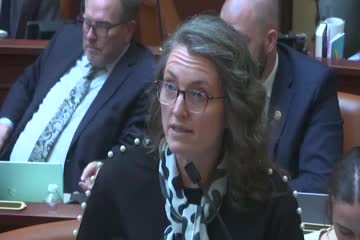
Sponsor commentary and why it matters: The bill sponsor said the measure aims to preserve a strong, safe medical program and to keep patients from turning to the black market. "If we don't have a strong, safe, effective medical program in the state of Utah, then we have 1 of 2 things," the sponsor said on the House floor, adding that the legislature must guard against unacceptable access channels and preserve clinical oversight. Supporters described the legislation as the product of a stakeholder working group and interim study work to address longstanding issues in Utah's medical cannabis program.
What the bill and debate addressed: Lawmakers discussed but did not adopt dosing-based potency limits in the bill; the sponsor and other legislators cautioned about conflating percentage-based potency measures and per-dose measurements, noting the need for clinical guidance. The sponsor said the program seeks products that provide therapeutic effects with "minimal psychoactive effects," and stressed health care provider involvement in patient dosing and care. Committee and floor discussion also flagged clinics that have issued medical-card recommendations after very short appointments; the sponsor said the bill contains a provision (floor discussion referenced a specific line) that prohibits prescribing within 500 feet of a pharmacy to address certain access concerns.
Funding for low-income patients: Representatives questioned where financial assistance for low-income patients would come from. The sponsor said a nonprofit already accepts private donations to help eligible patients with monthly medication costs and that the bill authorizes using a modest portion of the medical cannabis enterprise fund to allow that nonprofit to distribute stipends. The sponsor described the enterprise fund as composed of licensing fees and a patient processing fee of $3 collected when patients obtain medication; she emphasized that the program funding comes from user fees and licensing rather than general tax revenue and that private donations will continue to play a role.
Stakeholder process and follow-up: Multiple lawmakers described an ongoing cannabis working group and interim studies focused on THC thresholds, recodification and other technical issues. Supporters said the third substitute incorporates stakeholder feedback and attempts to consolidate prior provisions that were moved during recodification. At least one legislator urged continued stakeholder engagement and further study of potency and dosing.
Votes at a glance: Third Substitute HB203 — passed 57 yes, 15 no. The House also adopted the rules committee report sending House Bills 189, 268, 390 and 447 to the Education Committee and House Bill 407 to the Transportation Committee.
What to watch next: The bill passed the House and will be considered by the Senate. Lawmakers and staff indicated follow-up work will continue on THC/dosing studies and related interim committee work to refine technical elements of the medical program.