Get Full Government Meeting Transcripts, Videos, & Alerts Forever!
Get email alerts on the Legislative Transparency topic
No spam. Unsubscribe anytime.
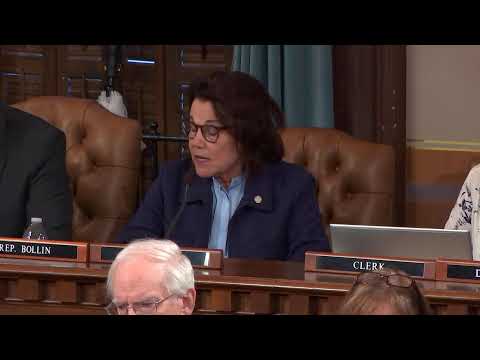
House Appropriations Committee hears testimony on bill to codify House Rule 14 transparency measure
Summary
Representative Koontz presented House Bill 44-20 to codify House Rule 14 and extend legislative-directed spending disclosure; witnesses and committee members discussed website costs, eligibility rules for grantees and forthcoming amendments.
Representative Koontz, sponsor of House Bill 44-20, told the House Appropriations Committee that the bill would codify House Rule 14 and require ongoing public disclosure of legislative-directed spending (LDS) requests.
"House bill 44 20 codifies into law the house rule 14, and it's a transparency measure," Representative Koontz said during testimony to the committee chaired by Chair Bolin.
Supporters and several committee members said the requirement for public disclosure would give Michigan residents a clearer view of where taxpayer dollars are requested to go. Chair Bolin described the change as binding the practice into statute so future legislatures follow the same disclosure standard. "It's an $83,000,000,000 budget that we are responsible for and making sure that we are being deliberative and very thoughtful in going through it," Chair Bolin said.
Committee members asked technical and implementation questions. Representative Farhat asked about the cost and operation of the public website the House used to display LDS requests; Representative Koontz said the site was developed in-house and estimated the cost was "minimal," adding it was launched in under a week. Representative Glanville and others asked for a fuller estimate of ongoing IT and maintenance costs and whether the budget process would account for those costs.
Members also pressed on eligibility and use restrictions. Representative McKinney raised concerns that a draft requirement for a grantee having a physical office in Michigan for the previous 12 consecutive months could exclude smaller organizations that operate from shared spaces or home offices. Representative Koontz said a fiscal address or PO box would be acceptable and that the bill asks for both a fiscal address and the location where funds will be used. Representative Edwards asked about planned corrections and restrictions; Koontz said proposed substitutes and tightening language (for example, preventing state funds from being used to pay back taxes) would be returned to committee before floor consideration.
Former Appropriations Chair Shane Hernandez and James Homan of the Mackinac Center for Public Policy testified in support of the bill. Hernandez said codifying the disclosure process would help guard against last-minute additions to the budget and argued for institutional benefits to the appropriations process. Homan said the bill helps lawmakers explain the public benefit of grants and provides more detail than typical budget bills.
Committee members and witnesses discussed several draft thresholds and requirements. Testimony referenced different time-based eligibility provisions: Representative McKinney cited a 12-month fiscal-office requirement in an early draft, while Shane Hernandez referenced a 36-month operational-history standard as an important safeguard. Representative Steckloff and Representative Glanville said they are working on amendments to clarify eligibility and permissible uses of funds.
No committee vote was taken on House Bill 44-20 at the hearing. Representative Koontz and multiple committee members said substitutes and technical corrections would be returned to the committee for review, with an anticipated further round of testimony in June.
The committee then moved on to other agenda items, including property conveyance bills that were later reported out of committee.