Get Full Government Meeting Transcripts, Videos, & Alerts Forever!
Get email alerts on the East Bank Governance topic
No spam. Unsubscribe anytime.
East Bank Development Authority approves bylaws process, seeks outside counsel and sets Feb. 19 meeting
Summary
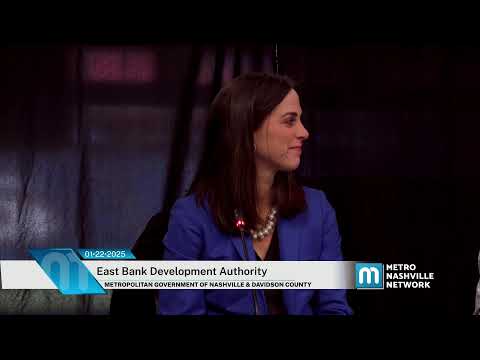
The East Bank Development Authority, meeting for the first time, voted to authorize its chair to work with the Metro Legal Department to draft an initial set of bylaws, directed the chair to solicit recommendations for outside legal counsel and set its next meeting for Feb. 19 at 9 a.m.
The East Bank Development Authority, meeting for the first time, voted to authorize its chair to work with the Metro Legal Department to draft an initial set of bylaws, directed the chair to solicit recommendations for outside legal counsel and set its next meeting for Feb. 19 at 9 a.m.
The actions come after Metro officials described the authority's enabling law and next organizational steps. Tom Cross of the Metro Legal Department said the body was created by a private act of the Tennessee Legislature that the Metro Council opted into, and that most of the authority's powers will require subsequent council approval. "This came to be through a private act under the state constitution," Cross said.
The authority was formed to coordinate redevelopment of the roughly 550-acre East Bank area between the interstates and the river, a site Metro officials said is far larger than recent Nashville projects such as The Gulch or National Yards. Bob Mendez, chief development officer in the mayor's office, told members the administration expects to propose an intergovernmental agreement with Metro that will address assets, employees and operating money and that Metro would likely cover early operating costs until rents or other revenues are sufficient.
What the board approved and why
At the meeting the board took three procedural actions: - It approved a motion authorizing Chair Emily Lamb to work with Metro Legal to prepare an initial, basic set of bylaws and bring them back for board consideration at the next meeting. The motion was made by Hal Cato and carried by voice vote. - It authorized the chair to solicit and bring recommendations for outside counsel for the authority's review and possible retention, to avoid conflicts where Metro Legal represents Metro in negotiations. Jimmy Granberry moved the motion and Scott Tift seconded; the motion passed unanimously. - It set the authority's next meeting for Wednesday, Feb. 19, at 9 a.m. in the same facility, subject to host confirmation; that time was moved and approved by voice vote.
None of the votes were recorded as a roll-call; each motion passed by voice vote and board members indicated unanimous support during the meeting record.
What Metro lawyers told the board
Cross outlined the statute's basic framework: the authority may own and administer property, plan and install infrastructure, enter and administer contracts, apply for grants, and, with Metro Council approval, borrow money (likely via bonds) to be repaid from authority revenues. He said the enabling statute gives the authority powers similar to parking, port, industrial development and housing authorities but noted three key limits: it cannot exercise condemnation power, it cannot adopt zoning or land-use regulation (those powers remain with the Metro Council and Metro Planning Commission), and it may not operate businesses that directly compete with private businesses.
Open meetings and open records
Cross also summarized statutory transparency obligations under state law, telling the board that meetings must be publicly noticed and agendas published (Metro staff recommended at least five days in advance). He summarized the Open Meetings Act exception allowing private attorney consultations only for pending or threatened litigation and said executive sessions cannot be used to reach final decisions. Regarding public records, Cross said most materials created for or by the authority 'including emails and reports'are subject to public-records requests and that the office typically gives an initial response within seven days and often produces large requests in staggered batches.
Organization, assets, counsel and timeline
Members discussed next organizational steps. Mendez and Metro staff said the mayor will appoint the authority's initial CEO and that they expect to name a CEO in the coming weeks, potentially by March. Staff recommended the authority retain separate outside counsel to review an intergovernmental agreement that would, in staff's outline, (1) assign Metro's rights under an existing 99-year development agreement with Fallon Company for a 30-acre parcel, (2) provide access to Metro-owned land (either by conveyance of title or a 99-year lease), (3) address employees (including moving a core group of Metro employees to authority employment while preserving pension status), and (4) set rules of interaction between Metro departments (for example NDOT responsibilities) and the authority. Mendez said Metro expects to propose the draft intergovernmental agreement to the authority by March and indicated he and Cross would prefer the board have counsel in place in time to consider the draft and, if possible, take final action before Metro's budget process in April.
On finances, Metro staff told the board that while a long-term plan anticipates authority rental revenues covering expenses and remitting surpluses to Metro, there is no such rent stream today. Metro staff said Metro would likely cover initial operating expenses until revenue is sufficient.
Public comment
During the public comment period, James Johnson, who identified himself as a member of the homeless planning commission and a tenant at Strobel House, raised questions about project funding and specific items on the plan. "The only question that I do remain to have ... about a $68,000,000 TPAC removal from this East Bank thing, and what does that have on the ... effect of the project, and not only the project, but the citizen at large, the taxpayers that are involved," Johnson said. He also asked why a Metro Development and Housing Agency (MDHA) logo appeared on plan materials and raised concerns about use of nonprofit (501(c)(3)) resources in the project. Board members did not take immediate action on those questions; staff said they would prepare resource and background materials for future meetings.
Next steps and board resources
Board members and staff agreed to create a public board-resources page with summaries of key documents, including the Fallon agreement, planning materials and infrastructure summaries, and to circulate those materials before the February meeting. Staff recommended the first few meetings include a business session and an extended presentation segment; members asked for a focused presentation on the East Bank vision plan and a concise summary of the Fallon development agreement at the next meeting.
Board members also asked about training requirements; Metro staff said some trainings are required but not necessarily annually and that staff would provide specific requirements.
Ending
The meeting adjourned after the scheduling and organizational votes. The authority plans to reconvene Feb. 19 at 9 a.m. to review draft bylaws and continue planning work.