Get Full Government Meeting Transcripts, Videos, & Alerts Forever!
Get email alerts on the Redistricting And Open Records topic
No spam. Unsubscribe anytime.
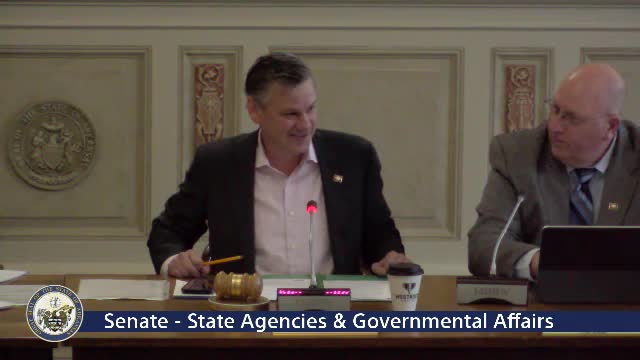
Senate committee adopts amendment to SB 12 tightening public-discussion rules for board of apportionment and passes bill
Summary
The committee adopted an amendment to SB 12 that narrows restrictions on public discussion by board of apportionment members to redistricting contexts and adds FOIA-related language; the amended bill passed the committee by voice vote.
A Senate committee adopted an amendment to SB 12 that narrows restrictions on when board of apportionment members must conduct or record discussions, clarifying that the stricter rules apply to redistricting activity and incorporating language consistent with open-records (FOIA) guidance.
The amendment was presented as tightening the bill so that routine private conversations — for example, a hypothetical conversation between a governor and spouse — would not trigger a requirement to record or treat the discussion as a public proceeding. Committee members were told the amendment adds FOIA-related language and guidance for board of apportionment members about how to handle apportionment discussions so decision-making is based on evidence presented at recorded public meetings.
The committee adopted the amendment by voice vote (motion to adopt made and seconded). The committee then voted to pass SB 12 as amended; the motion to pass as amended was made by Senator King and seconded by Senator Clark and carried by voice vote. Committee members noted the FOIA task force had reviewed and endorsed the overall direction of the bill and its amendment.
Committee discussion referenced a "jury" analogy used to explain that board members should base apportionment decisions on the evidence presented at public meetings rather than on extrajudicial discussions. The amendment’s sponsors said the change preserves members’ free-speech rights while imposing requirements that apportionment-related deliberations be documented at a public meeting or in written electronic form when appropriate.
With the committee’s passage, SB 12 will move forward within the chamber’s legislative process per normal committee-to-floor procedures.