Get Full Government Meeting Transcripts, Videos, & Alerts Forever!
Get email alerts on the Legislative Procedure topic
No spam. Unsubscribe anytime.
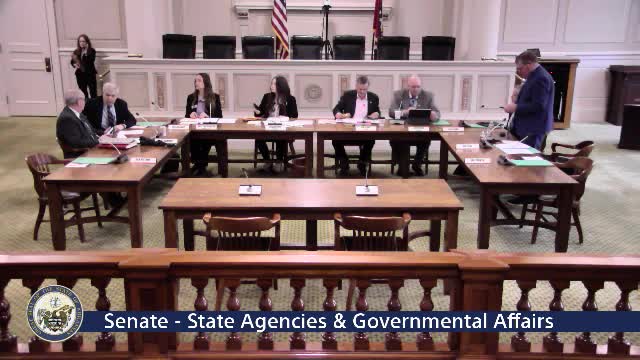
Senate committee delays action on House Bill 10-56 after amendment engrossed
Summary
A Senate committee discussed an amendment to House Bill 10-56 that would change a mandatory referral to a discretionary one. Members agreed to delay a final vote until the bill is reported to the full Senate and the desk is open, then reconvene briefly after adjournment to act.
A Senate committee meeting reviewed an amendment to House Bill 10-56 that replaces the word "shall" with "may" on page 3, top line 1, changing a mandatory referral into a discretionary one and altering which committee could receive certain bills.
The change matters because it would let the parliamentarian or chamber leadership direct particular bills — including those affecting veterans or with substantial fiscal impact — to the most appropriate committee rather than mandating referral to the joint committee on military and veterans. Committee members were told the amendment had been engrossed that morning but could not be acted on until the bill is reported to the Senate body and the Senate desk is open.
Committee members discussed options for handling bills that might be referred to a joint veterans committee, with several senators voicing concerns about scheduling and efficiency for a large joint panel. One senator said joint committees can be difficult to schedule because they have many members with competing obligations; another suggested limiting joint-committee meetings to a small number of special sessions during the legislative session to reduce conflicts.
Members discussed procedural safeguards and separation mechanisms under existing joint committee rules. Committee members noted that if a bill carries significant fiscal impact, it may be more appropriate for revenue-and-tax or budget committees, and that a joint committee's rules allow for members to request separation so that a bill could be considered by each chamber’s side if necessary. The discussion referenced past practice where some joint committees meet only for organizational or informational purposes while others meet to consider bills.
Because the committee was told the bill had been engrossed earlier in the day, members agreed they could not complete formal action at that time. The committee agreed to meet for a few minutes immediately upon adjournment of the Senate that day so the committee could take up the already-engrossed amendment and vote on the bill after the full Senate had had the opportunity to report the engrossment.
No formal vote on House Bill 10-56 was taken at the committee meeting; members postponed final action until the brief reconvening after adjournment.
The committee discussion placed emphasis on coordinating with chamber leadership to schedule any joint meetings sparingly and on clarifying which bills should be routed to revenue, budget or other specialized committees rather than automatically to the joint veterans committee.