Get Full Government Meeting Transcripts, Videos, & Alerts Forever!
Get email alerts on the Stormwater topic
No spam. Unsubscribe anytime.
White House officials review hydraulic study after repeated flooding in Covington Bend and Winchester Court
Summary
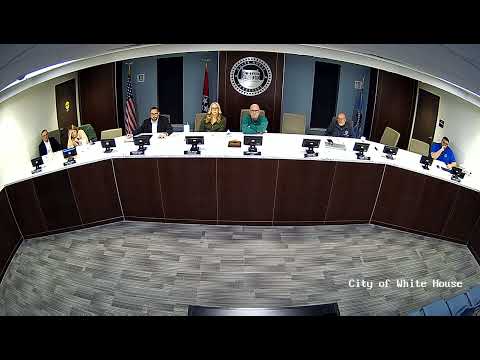
Residents of Covington Heights and Covington Bend described repeated basement and yard flooding at a White House City Council meeting; city staff presented a hydraulic analysis and cost estimate and recommended pursuing a 50-year design upgrade and budget prioritization.
Residents of Covington Heights and Covington Bend urged White House city leaders on Monday to address recurring stormwater flooding that has sent water into basements and yards on Winchester Court and nearby streets.
At a public-comment segment that preceded a staff presentation, Dean Kegeles, a Covington Heights resident, told the council “we have some serious issues” at 108 Winchester Court and said his basement has filled “up to 12 inches of water” on multiple occasions this summer. “If we have more than 3 inches of rain, we get flooding,” he said.
The council then considered a hydraulic-analysis and cost-estimate report prepared for the neighborhood. Jason (city staff, stormwater) introduced the study and said the problem stems in part from past construction changes that rerouted runoff into a relatively small pipe and a flat ditch behind the homes. An engineer on the project, Nate Bull, said the drainage basin that feeds the subdivision is much larger than the components receiving that flow, and that some pipe sections appear undersized for the runoff they now carry.
“The pipe, the ditch and then pipe section again as you move downstream” are the key features the study identified for upgrades, Jason said, adding that improving those segments would raise the system from its current five-year-design capacity to higher design levels depending on what the council chooses. On design standard options, the project team presented estimates for improvements to the 50-year, 100-year and 500-year design levels.
Bull recommended the 50-year option as the most reasonable balance of cost and reduced flood frequency. “To me is the most reasonable solution is the 50 solution,” he said. The consultant and staff noted that even a 50-year upgrade would not prevent an extremely unusual event from producing flooding, but would make flooding less likely than the current configuration.
Residents described repeated, localized damage to yards and homes. Lisa Henderson said her backyard routinely holds “4 to 6 feet of standing water” and that her children play there, and other neighbors said driveway edges and road paving were never finished properly during subdivision construction. Several residents said roughly seven homes have been repeatedly affected.
City staff said the study did not include a condition assessment of an underground pipe under a cul-de-sac; replacing that pipe would add to the estimate if staff determine it is necessary. The consultant also said the team did not evaluate downstream creek conditions beyond the road where the subdivision’s drainage discharges.
Council members directed staff to keep the project under consideration for the city’s next budget cycle and to pursue property and easement research needed to design and construct improvements. Jason said staff will bring prioritization for stormwater projects to the city’s budget process, which begins in January, and that staff will schedule on-site walkthroughs in the neighborhood so engineers and decision-makers can see conditions in wet weather.
Council members also discussed possible funding paths, including an SRF-type low-interest loan and the city’s stormwater fund. Staff said they will explore those financing options as they prepare a budget request.
The city invited the manufacturer ADS and other vendors to present product options for pipe material at a later meeting; staff said that could affect cost and constructability but did not present a formal recommendation on materials at this meeting.
Because the meeting produced no final vote or formal contract authorization, the council has not approved specific work or a funding commitment; staff will return with design, scope and funding proposals for council consideration.