
Insurance agency briefs lawmakers on $22M IT project, complaints backlog and fraud staffing
Get AI-powered insights, summaries, and transcripts
Sign Up Free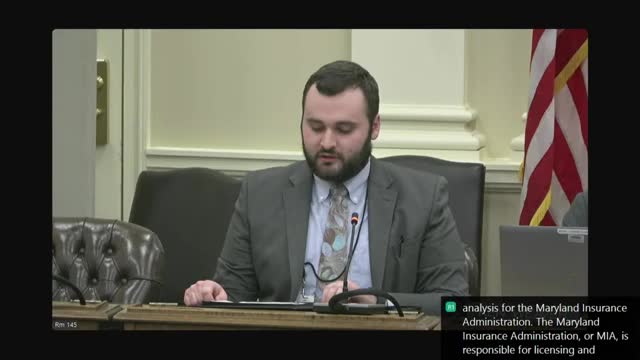
Summary
The Maryland Insurance Administration told the Transportation and Environment Subcommittee the agency is implementing a multiyear replacement of its 1990s-era insurance tracking system with higher projected costs and plans to address a backlog of property-and-casualty complaints and bolster the fraud unit with new positions.
The Transportation and the Environment Subcommittee reviewed the Maryland Insurance Administration's fiscal 2026 allowance Feb. 19, hearing from DLS and agency officials about an information‑technology overhaul, complaint backlogs and fraud investigations.
DLS analyst Scott Benson summarized the MIA operating budget, saying the fiscal 2026 allowance increases to $57.9 million, a roughly $1.1 million (1.9%) increase, and that the largest share of the agency’s spending — about $36 million — is regular personnel costs. Benson told the committee the budget includes 13 new regular positions and a net decrease of seven contractual FTEs; the insurance fraud division is a major recipient of new positions.
Benson noted the insurance tracking system project, which began in planning in 2019 to replace a custom 1990s legacy system, has grown well beyond early estimates: the fiscal 2026 allowance shows $7.7 million for the project and the committee record indicates the cumulative project cost shown in the governor’s budget highlights totals about $18.1 million through 2026.
Acting Insurance Commissioner Marie Grant told the subcommittee the agency estimates the total cost is somewhat higher — "a little over $22 million" — and that about $7.67 million is expected to be spent in fiscal 2026 from special funds. Grant committed to regular status reports to the budget committees and said MIA will work to keep the project on time and within the agency’s estimates.
The committee also heard that the agency faces an elevated backlog of property and casualty complaints — Grant said the backlog is about 3,000 complaints — driven in part by higher private‑passenger auto and homeowners costs after the COVID period. Grant described steps to address the backlog, including improved workflows and hiring contractual investigators and retirees to help close cases; the fiscal 2026 request includes funding for additional contractual help.
DLS presented metrics showing a decline in the percentage of property-and-casualty complaints resolved within 90 days since fiscal 2022, with projections for improvement in fiscal 2025–26. The fraud and enforcement unit also has seen fewer referrals opened and a declining closure percentage within 180 days; Grant said the administration has a new associate commissioner for fraud and enforcement and requested six additional positions for the fraud area to investigate complex cases.
Grant described a recruitment and retention challenge: the agency reported roughly 32 vacancies (about a 12.4% vacancy rate at the time of testimony) and said several new hires were scheduled to start in early March. She expressed confidence in filling slots and outlined retention efforts.
Committee members asked about the relationship between additional fraud investigators and dollar savings; Grant said MIA would provide more specific metrics and that addressing fraud helps to limit insurance costs for consumers. Members also pressed on the IT project cost increase and whether the new system would reduce long‑term staffing needs; Grant said the agency will report post‑implementation analyses but that at minimum the new system should make staff work more efficiently and improve data‑driven oversight.
No formal action or vote was taken at the hearing.