Get Full Government Meeting Transcripts, Videos, & Alerts Forever!
Get email alerts on the Architecture Review topic
No spam. Unsubscribe anytime.
Grand Island Board of Architecture approves routine design applications; one item stalled for lack of quorum
Summary
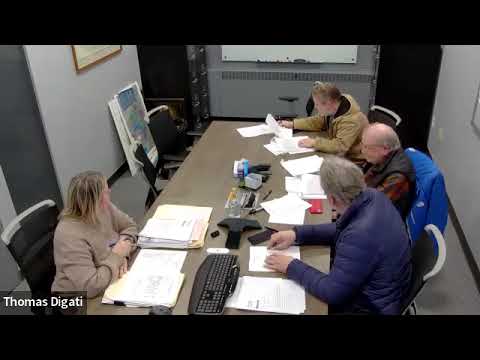
At its January meeting the Grand Island Board of Architecture approved a series of residential design applications and variances with standard conditions; one lot division on Williams Road was not voted because a member abstained, leaving no quorum.
The Grand Island Board of Architecture approved a series of residential design applications and variance requests at its January meeting, granting conditional acceptance for multiple projects while declining to act on a Williams Road lot division after a member abstained and the board lost a quorum.
Board members voted to accept the applicant submissions for 3554 Wallace, 1203 Terry House, 123 Sandywood, 475 Winstone Court, 22 Stonebridge (listed in the record as “Mitch Wallace, 22. 2 Hundred Stonebridge”), 200 Snowbridge, 217 Limestone Court, 333 Limestone Court and an item listed as “417 line.” In each approved case the board’s action was recorded as acceptance provided applicants meet the board’s standard requirements and any pending review conditions.
The board’s action list was procedural: items generally received brief design checks for differences in siding, roof pitch, window trim and garage configurations. Board Member 1, a voting member of the board, repeatedly moved to accept applications “provided all the other board requirements”; motions were seconded where noted and the board recorded verbal approval (“Aye”). Board Member 2 participated in design comparisons and asked applicants to clarify details such as siding color and roof pitch on several applications.
Discussion was typically limited to whether submitted designs were sufficiently different from neighboring homes. For 1203 Terry House, board members compared elevations, roof pitch and window headers and concluded that, despite similar massing, several trim and roof details were distinct enough to approve the submission with standard conditions. For 333 Limestone Court, members noted differences in window treatments, siding and garage count as grounds for approval. For 123 Sandywood and 475 Winstone Court the board approved the applications subject to the usual board requirements and pending reviews.
One agenda item — a lot division and related application for Williams Road — was not decided. During that item a board member disclosed a family relationship and abstained; the board recorded that with one member abstaining there was not a quorum to properly vote, and no final action was taken.
The meeting opened with approval of the December minutes and proceeded through the agenda’s residential items. Most decisions were approvals conditioned on staff and technical reviews and compliance with the board’s checklist. The board closed the meeting after completing the listed agenda items.
Votes at a glance
- Approvals: 3554 Wallace — accepted, provided applicant meets board requirements and pending variances already noted. - Approvals: 1203 Terry House — accepted with conditions after design detail review. - Approvals: 123 Sandywood — accepted, pending standard board requirements. - Approvals: 475 Winstone Court — accepted, to match existing context and meet board requirements. - Approvals: 22 Stonebridge (listed as “Mitch Wallace”) — accepted pending reviews. - Approvals: 200 Snowbridge — accepted pending reviews. - Approvals: 217 Limestone Court — accepted. - Approvals: 333 Limestone Court — accepted per committed revisions and pending review. - Approvals: 417 line — accepted after review of elevation differences. - No action: Williams Road lot division — not voted; one member abstained and the board lacked a quorum.
The board’s approvals were procedural and conditional; staff follow-up on outstanding reviews and requirements was implied for most items. The board did not adopt new policies or impose new standards at the meeting.