Get Full Government Meeting Transcripts, Videos, & Alerts Forever!
Get email alerts on the Budget Finance topic
No spam. Unsubscribe anytime.
City Schools reports FY24 closeout: revenue beat budget, personnel costs account for most spending
Summary
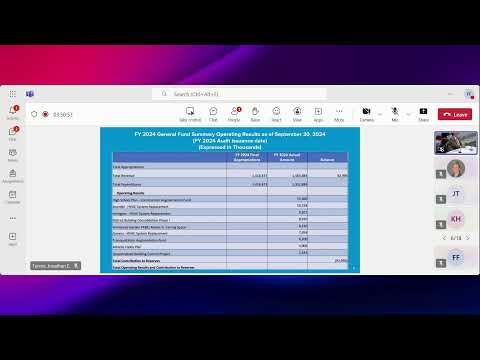
Finance staff told the board the district closed FY24 with about $1.48 billion in revenue against a $1.40 billion final budget, noted federal audit deadlines and said personnel costs remain roughly three‑quarters of expenditures.
Baltimore City Public Schools finance staff presented a fiscal‑year 2024 closeout update to the Board of School Commissioners on Jan. 20, reporting final revenues above the adopted budget and reiterating federal and state reporting deadlines.
Deputy Chief Financial Officer Mary Anne Cox and Chief Financial Officer Chris Daugherty told commissioners that the district’s actual revenue for FY24 was about $1.48 billion compared with a final budget of roughly $1.40 billion. The presenters said variances reflect state and local true‑ups, federal reimbursements and other miscellaneous receipts.
Cox reviewed reporting obligations, noting the district follows MSDE financial reporting rules and COMAR timelines. She said external audited financial statements are submitted to MSDE and that the single audit of federal funds is subject to its own deadlines. The presenters said finance accrues revenue based on the best available information while awaiting final state calculations.
By object, staff said the district continues to spend the majority of its resources on personnel: salaries, wages and fringe represented about three‑quarters of total expenditures. An indirect‑cost recovery credit of roughly $9.8 million reflected one‑time recoveries tied to federal COVID‑era grants, the presenters said, and is not expected to recur at that level.
Staff described the district’s assigned fund balance process under board policy: the CEO may assign fund balances but must return to the board to approve actual spending from those balances. The presenters said much of the assigned balance funds capital projects; they noted several supplemental appropriations approved earlier in the meeting that will be funded from those resources.
Finance emphasized that federal reports such as the single audit and maintenance‑of‑effort calculations remain important compliance items and that the district will continue to provide updates to the board as FY25 budgeting progresses.
The board took no additional action during the presentation.