Get Full Government Meeting Transcripts, Videos, & Alerts Forever!
Get email alerts on the School Boundary Demographics topic
No spam. Unsubscribe anytime.
Grand Forks district schedules public meetings on demographic study, boundary line concepts
Summary
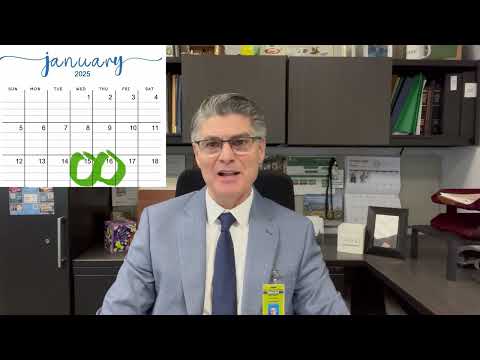
Superintendent Terry Brenner announced two public input meetings Jan. 15 and Jan. 16 to review building‑level capacity data and proposed school boundary concepts developed with demographer Rob Schwartz; no implementation dates have been set.
Terry Brenner, superintendent for the Grand Forks and Grand Forks Air Force Base School Districts, announced two public input meetings on a district demographic study that will present boundary‑line concepts and building‑level capacity data.
The presentations are scheduled for 7 p.m. Wednesday, Jan. 15, at Central High School and 7 p.m. Thursday, Jan. 16, at Red River High School. Brenner said the meetings will include a review of concepts, time for questions and feedback, and a follow‑up online survey to capture additional community input.
The district contracted demographer Rob Schwartz to analyze enrollment trends and capacity at the elementary, middle and high school levels. "We are looking at building level capacities at elementary, middle, and and high school levels, carefully watching how neighborhoods grow and how those changes put pressure on some of our schools," Brenner said.
The school board directed administration to carry out the work throughout the school year. That effort has included a demographic task force and an administrative boundary lines group, Brenner said. He emphasized there are "no defined implementation dates for any boundary line adjustments," and that recommended changes "could be implemented a few years out." The sessions are expected to last 60 to 90 minutes.
Brenner said Central High School and Red River High School are host sites for the meetings, but the conversations will address boundary concepts for all district schools. He invited residents to attend either or both sessions and said participation is not restricted by where people live.
The district noted this is the first boundary‑focused process since 2014 and framed the meetings as an opportunity to enlist broad community input before any policy change or implementation timeline is set.