Get Full Government Meeting Transcripts, Videos, & Alerts Forever!
Get email alerts on the Board Calendar topic
No spam. Unsubscribe anytime.
Multnomah County commissioners seek clearer annual calendar, budget season spacing
Summary
Multnomah County commissioners discussed a draft board calendar and related work-plan scheduling to reduce last‑minute meetings during the April–June budget season and improve predictability for staff and the public.
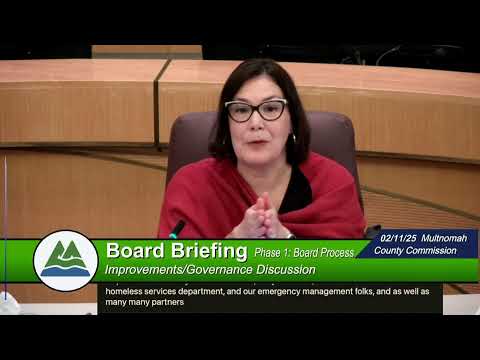
Multnomah County commissioners on Tuesday discussed a proposed annual board calendar and how to coordinate it with a forthcoming work plan to reduce last‑minute scheduling, give staff clearer notice and make meetings more predictable for the public.
Commission Chair (identified in the meeting as Chair) said the work follows the board’s December retreat and is meant to “bring transparency to this kind of discussion,” and Commissioner Julia Bridal Edwards, who co-led the governance work, urged the board to adopt a calendar that signals when meetings will and will not occur so departments can plan ahead.
Chief of Staff Jenny Smith walked commissioners through the types of meetings the board holds, saying the county schedules briefing/work‑session meetings typically on Tuesdays and voting meetings on Thursdays, with an expanded block of budget hearings from April through June each year. “In later spring from April through June every year we have budget hearings and work sessions…to inform your decision on the final county budget for the year, which is adopted in mid June,” Smith said.
County Budget Director Christian Elkin said the budget season has been reworked to avoid “overstacking” presentations early and to add an extra week of deliberation so the board will have more time for discussion. Elkin said the team will publish a more detailed version of the calendar showing individual topics and time allotments before budget votes.
Commissioners asked staff to use flexible labels (for example, “AM session” rather than a fixed start time) on the public calendar to reflect the reality that some meeting start times shift during heavy budget weeks. Commissioners also discussed practices for notifying staff of planned absences and for routing items that need to be moved earlier or after budget season so they do not get lost during a period of heavy scheduling.
Next steps: staff said they will revise the draft calendar to reflect commissioner feedback, circulate it again for comment and then post a basic public calendar soon while continuing to layer in a synchronized work plan.
Ending: Commissioners asked staff to send the updated calendar and the more detailed budget schedule to their offices as soon as it is ready, and to coordinate with department directors and board clerks to reduce last‑minute agenda changes.