Get Full Government Meeting Transcripts, Videos, & Alerts Forever!
Get email alerts on the Public Safety Sheriff Operations topic
No spam. Unsubscribe anytime.
Polk County sheriff outlines new dog kennel timeline, major-crimes coordination and drug deflection concerns
Summary
Sheriff Curtin told the Polk County Board of Commissioners the county’s new animal kennel should arrive the week of Feb. 24, described a multi-agency response to a recent death investigation, and discussed traffic-data gaps and the limited early results of the state-funded deflection pilot (Senate Bill 4002).
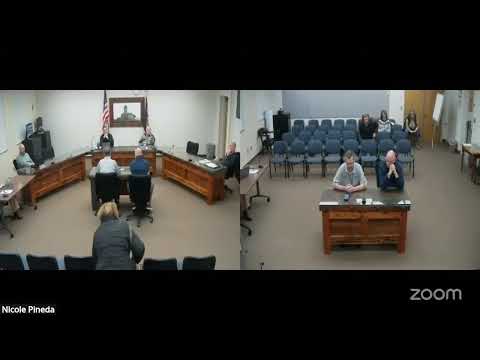
Sheriff Curtin updated the Polk County Board of Commissioners on several operational items Tuesday, saying the county’s new dog kennel is scheduled for delivery the week of Feb. 24 and describing efforts to coordinate a recent homicide investigation and to obtain more detailed traffic-response data from state agencies.
Curtin said the kennel unit is 14 feet by 54 feet and “enough to hold 12 dogs,” and that the county has had the concrete pad poured and trenching completed to bring power and data conduit from Building C. “They said if we got some things done, they could bump it up. And so it's going to be delivered the week of February 24, I think,” Curtin said.
The sheriff described how the kennel will speed handling of stray animals by allowing the county to vaccinate animals locally and to work with rescues and volunteers. He said the county had expected a local veterinary partner but that the clinic backed out “as things moved up the chain of command,” so staff member Jody will work with vets and volunteers to ready animals for rescue or adoption.
Curtin also summarized a multi-agency major-crimes response to a recent traffic crash near Independence in which a deceased person was found inside a vehicle. He said the county activated a mutual-aid major-crimes team that included Salem Police, Dallas, Monmouth, Grand Ronde and the Oregon State Police (OSP). “We had the first briefing with all of the groups...two, two and a half hours after we kind of made the decision to...get going on this murder case,” Curtin said.
On traffic safety, Curtin said OSP provided partial data showing 355 responses to crashes from Jan. 1 through October, with an average of about 72 minutes on scene per incident. He said ODOT did not produce the data he requested and that he will continue to press state agencies for current crash, injury and citation data to inform county road planning. “We need the real data about crashes, injuries, deaths, and citations,” said Commissioner (title not specified) during the discussion.
Curtin clarified the sheriff’s office position on immigration enforcement: under Oregon law his office may not assist or coordinate with U.S. Immigration and Customs Enforcement (ICE), though it must not obstruct federal agents. “We cannot...assist, coordinate, help ICE officials in any way,” Curtin said. He added that the jail may ask about immigration status only after reading a disclaimer to the person in custody.
The sheriff discussed the county’s participation in a statewide deflection pilot (referred to in the meeting as Senate Bill 4002) that provides roughly $250,000 to Polk County for an 18-month pilot. Curtin said the program began targeted and small by design and that the county recently began accepting social referrals from non‑enforcement sources. He reported that “eight have been entered, one is in,” and that only one client had been identified as a successful completion at the time of the meeting. Curtin and commissioners emphasized the pilot’s early stage and said they would monitor outcomes before deciding whether to continue or expand the program.
Commissioners pressed for clearer performance metrics and warned that the county should be able to justify ongoing spending. “If the bang is not there for the buck, there’s no reason to continue it,” said a commissioner (name not specified). Curtin and other commissioners stressed training and slow rollout as reasons for modest early enrollment and said county leaders want visible evidence of treatment referrals and successful outcomes before committing further funds.
Curtin closed by thanking staff and volunteers for their work on the kennel and other initiatives and said he will continue pursuing more complete traffic and program data from state partners.
The remarks occurred during the sheriff’s agenda item; no formal board action was taken during that portion of the meeting.