Get Full Government Meeting Transcripts, Videos, & Alerts Forever!
Get email alerts on the Education Curriculum topic
No spam. Unsubscribe anytime.
Region 15 presents curriculum updates, highlights UFLI phonics rollout and growth in Seal of Biliteracy
Summary
District presenters described revisions and pilots in world language, social studies and ELA curricula; rolled‑out the UFLI phonics program in K–2; reported three years of NWEA Reading Fluency data; and said 35 students in the class of 2024 earned the state Seal of Biliteracy.
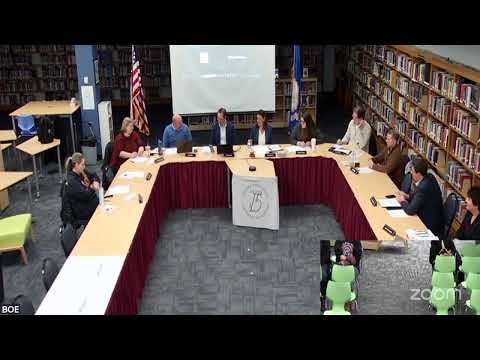
Region 15 Board of Education curriculum presenters briefed the board on changes and pilots across world language, social studies and English language arts and shared early literacy assessment results.
The presentation, led by Dr. Chiapetta with Superintendent Smith in attendance, described a districtwide push toward proficiency‑based world language instruction and deeper, theme‑based social studies units, along with K–5 expansion of structured phonics and reading assessments.
Dr. Chiapetta framed the world language changes as a shift away from grammar‑first instruction toward immersive, proficiency‑focused teaching: "This is more about the immersion in the language, hearing the language, using the language, rather than learning the rules first." The district reported steps to align curriculum and grading rationales across middle and high school and said Connecticut’s new January 2025 world language standards will prompt further curriculum alignment.
Presenters described specific items under way or planned:
- World language: Middle schools offer beginner French and Spanish across grades 6–8, with most students expected to enter high school at level 2. The district added Italian at the high school and offers electives such as Spanish for Health Care and "cultural Spanish" as alternate credit pathways. The district is promoting the state Seal of Biliteracy; presenters said 35 students in the class of 2024 graduated with the seal (reported as about 14% of that graduating class). The district uses ACTFL assessments and, when ACTFL tests are not available for a language, an oral proficiency interview (OPI).
- Social studies: Region 15 piloted InquiryEd at several elementary classrooms; the presentation said InquiryEd aligns to Connecticut’s revised social studies standards and that InquiryEd is proposed in the 2025–26 budget for grade 5. Middle and high school social studies work included reworking units around themes and primary sources and building common assessments to reduce unintended duplication between grade levels.
- English/ELA and literacy: The district selected the UFLI phonics program for K–2 and described related professional development for teachers and coaches. District staff reported purchasing decodable texts using state funds but said not every available decodable aligned with UFLI; the district plans to purchase additional decodables in a variety of genres to better match the phonics scope.
- Assessments and interventions: Region 15 has used the NWEA Reading Fluency measure for three years and shared aggregate results showing gains in phonological awareness and phonics across cohorts. Presenters noted the NWEA Reading Fluency measure recently received a high universal screening rating from the National Center on Intensive Interventions (part of AIR). The district also continued to deploy Orton‑Gillingham strategies in Tier 2 and Tier 3 interventions.
Board members and others asked about alignment of new state standards and the district’s professional learning structures. Dr. Chiapetta and other staff said high‑school and middle‑school teachers hold PLCs or department time to share practice and that instructional teacher leaders (ITLs) gather teacher feedback that drives curriculum revision and summer curriculum writing.
The presentation noted next steps include summer curriculum writing to align with new state standards, continued professional learning for proficiency‑based instruction, expansion of InquiryEd contingent on budget approval, and continuing data collection to refine intervention supports.
Speakers quoted in this article are drawn from the meeting transcript and include Dr. Chiapetta and Superintendent Smith. The presentation materials and a district video were referenced during the meeting but are separate from the transcript.