Get Full Government Meeting Transcripts, Videos, & Alerts Forever!
Get email alerts on the Strategic Plan topic
No spam. Unsubscribe anytime.
Rapid City Area School District presents midyear strategic-plan update; student literacy and staff turnover flagged
Summary
Rapid City Area School District 51-4 leaders presented a midyear review of their strategic plan at a study session, reporting improvements in data collection and communications while highlighting several challenges — most notably concerns about grades 2–8 English language arts performance, flat attendance, and staff turnover.
Rapid City Area School District 51-4 leaders presented a midyear review of their strategic plan at a study session, reporting improvements in data collection and communications while highlighting several challenges — most notably concerns about grades 2–8 English language arts (ELA) performance, flat attendance, and staff turnover.
Student pillar: data collection and mixed test results
District leaders said data-collection systems and some test measures show encouraging signs, but math and ELA results were uneven. The district reported growth in three of four assessed areas (K–1 Acadience and several MAP testing bands), while grades 2–8 ELA results remain below targets. "The data at the January was 81.5%, so we are flat," Dr. Strasser said when asked about attendance.
District staff said work to identify root causes is under way. Leaders pointed to inconsistent implementation of a guaranteed and viable curriculum across schools as a likely contributor to uneven outcomes: when pacing or unit sequence differs significantly between buildings, students who move schools can face gaps, presenters said. The district is pursuing multiple actions: deeper analysis of building-level data, additional support from the Teaching and Learning Innovation (TLI) team, and curriculum adoption pilots aligned with the science of reading.
Several leaders highlighted the district’s investment in AIM/LETRS-style professional learning focused on the science of reading. District presenters said roughly 450 staff are taking AIM training this year and stressed the work requires time to show results. The district also plans pilot curriculum adoptions next school year to align instructional materials with the science-of-reading approach.
Communication pillar: new platform launched
The district launched a new communications platform, Thrillshare, on Feb. 3 and plans a refreshed website and app in mid‑April developed with Apogee. Communications staff said the new platform produced fewer negative public comments than previous channels and should increase reach and consistency across schools.
Community pillar: volunteer process and tracking
Leaders described improvements to the volunteer approval process and new efforts to increase parent and caregiver survey participation at conferences. Volunteer coordinator Becky Hagan and others said the district can show lists of approved volunteers by building but currently does not centrally track volunteer hours. District staff are evaluating options to surface volunteer needs to the community and to create more targeted outreach so principals can quickly find volunteers with relevant skills.
Staffing pillar: turnover and exit interviews
Human-resources staff reported 39 separations so far this school year. According to the figures shared in the session, 81% of departures were resignations, 12% retirements and 6% terminations; 47% of those departures involved employees with less than one year of service. Teachers represented the largest group of departures at 34%, followed by paraeducators (19%) and transportation employees (14%).
A human-resources presenter noted limitations with current exit data: most exit responses are online and many contain no reason for leaving. The district plans to consider in-person or more structured exit interviews for staff who provide notice and to break recruitment and retention strategies into separate, targeted plans for different job groups because "one size fits all" does not address the different needs of teachers, bus drivers and support staff.
Other next steps
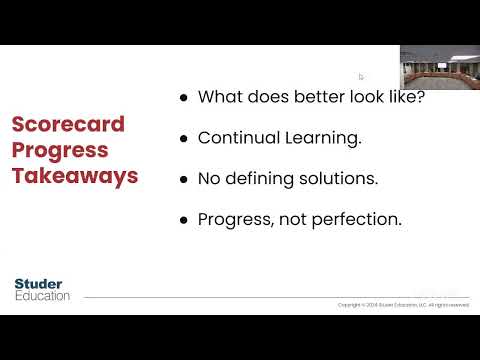
District leaders said they will continue to refine scorecard metrics across pillars to ensure the measures tracked align with practical actions the district can take. Communications staff will investigate the variety of platforms used in buildings and consider a recommended or required approach to reduce fragmentation. The district will also work to increase volunteer visibility and consider platform enhancements that let principals post specific needs.
Board reaction
Board members asked for clearer, year‑over‑year comparisons and more timely, actionable numbers for midyear updates. Several members urged the district to present comparable "same-to-same" numbers (for instance, year‑over‑year snapshots after accounting for timing differences such as negotiated pay raises) to avoid misinterpreting transient trends. Board members also discussed whether the district should eventually adopt a uniform communications policy or platform for all schools to reduce confusion for families.
The session closed without additional board action on the strategic plan items; district staff said they will return with revised metrics and further details on pilot curriculum adoptions, AIM training outcomes, volunteer-platform options and exit-interview practices.