Get Full Government Meeting Transcripts, Videos, & Alerts Forever!
Get email alerts on the Enrollment topic
No spam. Unsubscribe anytime.
Public commenters and board debate causes of declining enrollment and proposed education savings accounts
Summary
Speakers at the Rapid City Area School District 51-4 board meeting urged the board to address falling enrollment. A parent group leader blamed "woke" curricula; teachers and several board members said causes are more complex and urged accountability and outreach.
Florence Thompson, president of South Dakota Parents Involved in Education and a retired school psychologist, told the Rapid City Area School District 51-4 school board that declining enrollment stems from what she described as "woke" curriculum and called on the board to prioritize a "common sense, middle-of-the-road" superintendent and to remove what she termed indoctrination from classrooms.
Thompson said families are taking children out of public schools and that the district should offer an education focused on basics to attract students back. "If you want to have students coming back to your school district, you need to offer them an education and get rid of all the frou-frou," she said.
The board and other speakers pushed back on a simple explanation. Dr. Sarah Gross, a first-grade teacher with a doctorate in educational leadership, said multiple factors are affecting enrollment, including homeschooling trends and COVID-related shifts, and expressed concern about a proposed expansion of education savings accounts in the governor's budget. "Four million for education savings accounts has me, as a public school lover, really worried," Gross said, asking the board and community to guard public accountability for state dollars.
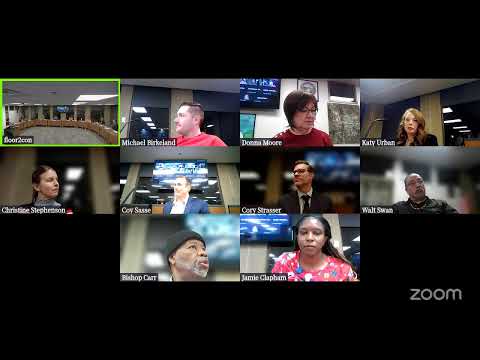
Board members echoed the caution against a single-cause narrative. School board member Christine Stephenson said the district needs to ask why students are leaving but warned against assuming the district is losing students solely because of politicized curriculum. "I think it's a mistake to think that it's just a pretty black-and-white issue," Stephenson said, adding that the district should continually tell its story to the community.
Other board members said the district's teachers provide strong instruction and that declining enrollment is a complex problem that should be discussed at multiple meetings and addressed through outreach. Several board members also noted the district should monitor proposed state policy changes, including education savings accounts and any legislative changes affecting homeschool oversight, because such changes could shift public dollars away from public schools and affect accountability.
The discussion came during the meeting's public comment and board response segments and included multiple references to state budget proposals and homeschool law changes. Board members said they will continue monitoring legislative developments and consider outreach and recruitment as part of a broader response.
Board members and speakers did not take formal action on enrollment policy at the meeting. The board later approved routine agenda items and agreements by voice votes.