Get Full Government Meeting Transcripts, Videos, & Alerts Forever!
Get email alerts on the Government Transparency topic
No spam. Unsubscribe anytime.
Council amends meeting rules on audio/video recording to track Brown Act language
Summary
The council adopted an amendment to its rules and procedures clarifying recording rights during open meetings and prohibiting obstruction of aisles, entrances and exits; council retained language consistent with the Brown Act.
The Santa Ana City Council unanimously adopted an amendment to its rules and procedures addressing audio, video and photographic recording during council meetings and clarifying that no person may obstruct aisles, entrances or exits in the council chamber.
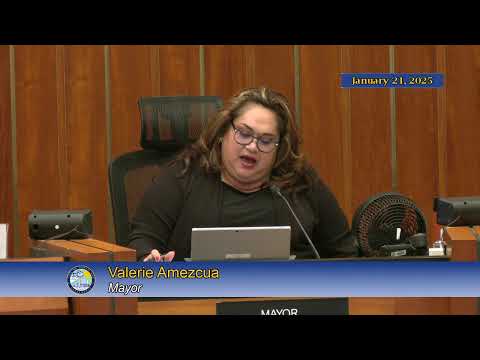
Council discussion focused on whether to restate the exact Brown Act language or provide a clearer local policy; the city attorney explained the Brown Act (California Government Code §54950 et seq.) governs the right to record and that a legislative body may make a reasonable finding that recording would cause a persistent disruption. Councilmember Jorge Becerra moved the resolution and Mayor Valerie Amezquah seconded. After discussion the council approved an edited version that removed additional limiting text in subsection b and retained language making the policy consistent with the Brown Act. The final motion as adopted reads in part that attendees have the right to record proceedings and that no person shall obstruct aisles, entrances or exits of the council chamber; it also notes the legislative body may act under state law if recordings create a persistent disruption.
Vote: 7 ayes, 0 nays.
Councilmembers said they wanted the rules to be clear, consistent with state law, and accessible to future staff and the public; the city attorney confirmed the Brown Act’s requirements preempt local policy, so the adopted rules are intended to track and clarify state law for the public and staff.