Get Full Government Meeting Transcripts, Videos, & Alerts Forever!
Get email alerts on the Youth Services topic
No spam. Unsubscribe anytime.
Redondo Beach youth commissioners receive teen survey showing mental health, substance use and demand for teen-center programs
Summary
Commissioners received and filed results of a city teen survey that drew 214 responses. Respondents ranked mental health and substance/drug abuse as top issues and expressed interest in cooking, field trips and movie nights; communications preferences included email and Instagram.
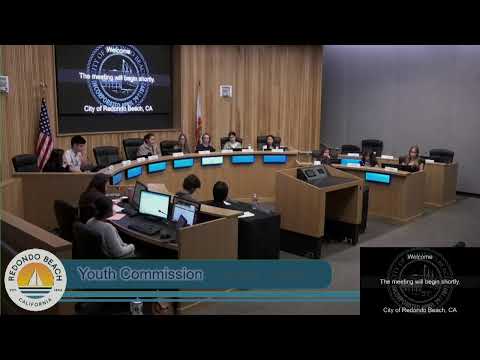
At a meeting of the Redondo Beach Youth Commission, commissioners voted to receive and file results of a teen survey that collected 214 responses and asked 18 questions about activities, barriers and priorities for local teens.
The survey, which was open Jan. 8–Feb. 4 and distributed on the city website, social channels and the RUHS morning email, showed a majority of respondents living in ZIP code 90278. Respondents most often chose unstructured socializing and watching movies as favorite activities; top program interests included cooking and baking, field trips and social events. When asked to rank issues facing teens, respondents placed mental health first and substance and drug abuse second.
Sonia (staff member), who presented the results, told commissioners the full dataset and open-ended responses are included in the blue-folder packet and encouraged subcommittees to use the data to shape projects and programming. Sonia said the survey received “a really good showing” with 214 respondents and emphasized the data will inform subcommittee planning.
Why it matters: The results are intended to guide the commission’s subcommittees as they plan outreach and activities and as the commission considers re-opening the teen center. Commissioners and staff highlighted the data’s use for communications, program scheduling and facility amenities.
Survey highlights and planning implications
- Respondent count and timing: 214 completed responses; survey open Jan. 8–Feb. 4. - Geography and schools: Most respondents were from North Redondo (90278); many were RUHS students, with some responses from junior-high students and a few nonresidents. - Activities and programs: Top activities were unstructured hanging out and movie nights. Top program interests were cooking/baking and field trips; study rooms and snack/vending areas ranked high among desired teen-center amenities. - Barriers: Schedule conflicts were the most commonly selected barrier to participation. - Transportation and outreach: Just over 60% said they have a means to travel independently within the city; preferred notification methods were email, social media and texts. Instagram was the most-used platform (about 70%), followed by TikTok (about 37%).
Commission direction and next steps
Commissioners voted to receive and file the survey results so subcommittees could incorporate the findings into program planning. Sonia asked subcommittees to review the full responses in the blue-folder materials and use them to identify three or four priority activities from the many suggestions submitted.
Subcommittee and staff updates noted at the meeting included the launch or repurposing of a Redondo Teens Instagram page and a new teen landing page on the city website where the commission is advertising applications for next year’s youth commission; staff reminded current commissioners that applications for the 2025–26 term are due by May 30.
Public comment and youth outreach
Helena Rashid Froke, a junior at RUHS and a volunteer with Allcove and the Allcove youth advisory group, said she and her peers will tour Allcove and highlighted upcoming youth events and open youth-advisory applications. Commissioners and staff encouraged continued outreach to students and use of the RUHS morning email, which staff credited with boosting survey responses.
The commission’s receipt and filing of the survey does not by itself adopt any policy; it formalizes that commissioners reviewed the data and will use it to inform subcommittee work and future agenda items.