Get Full Government Meeting Transcripts, Videos, & Alerts Forever!
Get email alerts on the Transportation Environment topic
No spam. Unsubscribe anytime.
Long Beach Council asks city manager to seek accelerated transition to zero-emission refuse trucks, report back in 90 days
Summary
The City Council approved a motion directing the city manager to explore strategies and incentives for accelerating the transition of private and city-owned refuse trucks to zero-emission vehicles and to report back within 90 days. Councilmembers emphasized air quality, job creation and infrastructure planning.
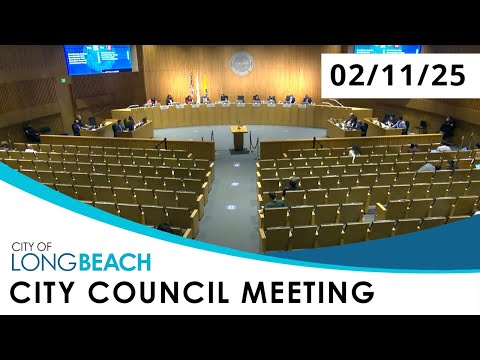
Long Beach City Council voted Feb. 11 to ask the city manager to develop strategies to accelerate the transition to zero-emission refuse trucks for both private haulers and the city fleet, and to return to council with a report within 90 days.
Councilmember Cindy Allen, who sponsored the motion with Mayor Rex Richardson and Vice Mayor Roberto Yuranga, said the South Coast Air Basin faces among the worst ozone and air quality problems in the nation and that electrifying heavy-duty refuse trucks would reduce local pollution and public-health risks. "Battery electric vehicles produce zero emissions, which significantly reduces air pollution and benefits Long Beach residents, particularly those in disadvantaged communities," Allen told the council.
The motion asks staff to clarify how the city's existing zero-emission vehicle and infrastructure policies apply to refuse haulers, to identify grant opportunities, to incentivize good-paying union jobs through city procurement and to plan for long-term charging infrastructure. It also requests the city attorney draft a resolution indicating the city's policy preference to prioritize future franchise agreements with waste haulers that commit to a fully zero-emission refuse fleet by 2032.
Supporters at the meeting included labor and environmental organizations as well as business representatives who argued the transition could create local jobs in manufacturing, installation and maintenance. Dave Shukla, a community commenter, urged the council to pair electrification with new clean energy generation and apprenticeships so the grid and workforce scale with increased electricity demand. "Full stop: the sooner you turn over the fleet and the sooner you create city-owned infrastructure, the cheaper it will be in the long run," he said.
Public commenters from environmental justice groups emphasized near-term health benefits for neighborhoods often exposed to truck emissions; several labor speakers urged inclusion of apprenticeship and local-hire provisions in procurement. City officials noted technology for heavy-duty electrification is improving and that a phased timeline and partnership with utilities would be necessary to scale chargers without disrupting service.
The motion passed unanimously. Staff said they would prepare a 90-day report that identifies funding opportunities, a procurement strategy aligned with local hiring and apprenticeship goals, and a preliminary plan for charger siting and grid upgrades.