Get Full Government Meeting Transcripts, Videos, & Alerts Forever!
Get email alerts on the Housing Policy topic
No spam. Unsubscribe anytime.
Long Beach council approves citywide expansion of inclusionary housing rules after months of debate
Summary
After months of study and extensive public comment, Long Beach City Council voted to expand the city's inclusionary housing requirements citywide, setting submarket-specific affordability mixes and a phased implementation plan to add affordable units across neighborhoods while preserving incentives for development.
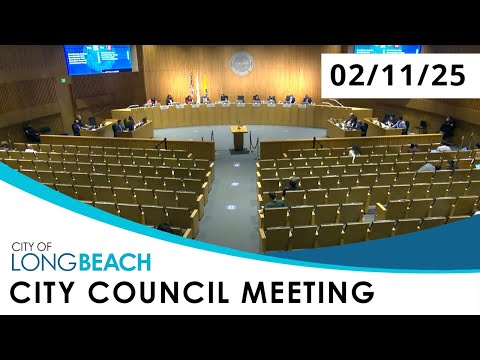
Long Beach City Council voted Feb. 11 to expand the city’s inclusionary housing ordinance from its prior coverage in downtown and Midtown to apply citywide, adopting new affordability mixes and a phased implementation schedule after extensive public comment and staff briefings.
City staff told the council the change is intended to produce more mixed-income housing across Long Beach and help the city meet state housing goals. Christopher Koontz, director of Community Development, said staff’s recommendation grew from outreach and an economic feasibility study and is designed to “expand inclusionary housing requirements to other areas of the city in a way that is thoughtful, economically balanced and impactful.”
The council and staff framed the change as part of a larger strategy to meet the city’s Regional Housing Needs Allocation (RHNA) and to “affirmatively further fair housing,” by encouraging affordable units in higher-opportunity neighborhoods and reducing concentrations of poverty in other areas. Stephanie Harper, a Community Development staffer leading the project presentation, said the city has already seen affordable units produced under the existing policy and that recent citywide housing growth makes citywide inclusionary rules timely.
Under the adopted approach, the city will treat geographic submarkets differently: projects in downtown and some other areas will follow a 12% set-aside with a mix of very low- and low-income units; certain high-resource census tracts will target primarily very low-income units; moderate- and low-resource areas will use mixes intended to reduce concentrated poverty. The ordinance also keeps a threshold that applies to projects of 10 or more units, and staff recommended a three-year phased implementation for most areas to allow developers time to adjust financing plans.
Councilmembers and residents debated two central questions: whether the policy should require deeper affordability (including an “extremely low” category) and whether there should be a phase-in period. Several public speakers urged the council to require 11% very-low and 5% extremely-low units citywide and to remove any phase-in. Spencer Thomas, a Long Beach resident, told the council “the 3 year phase-in period... needs to be now,” describing personal experience with long-term substandard rental housing. Other speakers, including community organizers and housing advocates, urged stronger, immediate affordability requirements to protect renters and low-income households.
Staff and several councilmembers warned that requiring a higher percentage of deeply subsidized units could trigger state review and risk project feasibility. Koontz noted that state guidance and the city’s earlier economic study set a practical maximum in most markets at about 11–12 percent total inclusionary units, and that a requirement substantially above that level would require a new economic feasibility study and could reduce the total number of housing projects built.
The council took several adjustments during debate. Members agreed to keep decisions on alternative compliance proposals (options a developer can seek instead of building on-site units) under the City Council’s review rather than delegating them to the Planning Commission, and asked staff to report back on implementation after an initial period. Councilmembers also asked staff to ensure high-resource census tracts take a share of inclusionary units; staff said they would finalize the exact very-low/low splits for those tracts to maintain the overall adopted percentages.
Supporters said the measure will generate affordable units in parts of Long Beach that historically produced little. Opponents and some real-estate representatives warned that steep or immediate requirements could chill development and argued the city should preserve incentives to keep projects viable. City staff repeatedly said the policy is one tool among many — and that state and federal subsidies, density bonuses and other programs would remain important to reach the deepest affordability levels the city needs.
The council voted to approve the proposed citywide expansion with the amendments discussed in the meeting; staff said they will return with a final ordinance consistent with the council’s direction and technical adjustments. The motion carried.